

In 2002, United States Immigration and Customs Enforcement was created out of concern for national security following the attacks on the World Trade Center a year prior.
24 years later, the agency has become a source of nationwide political division.
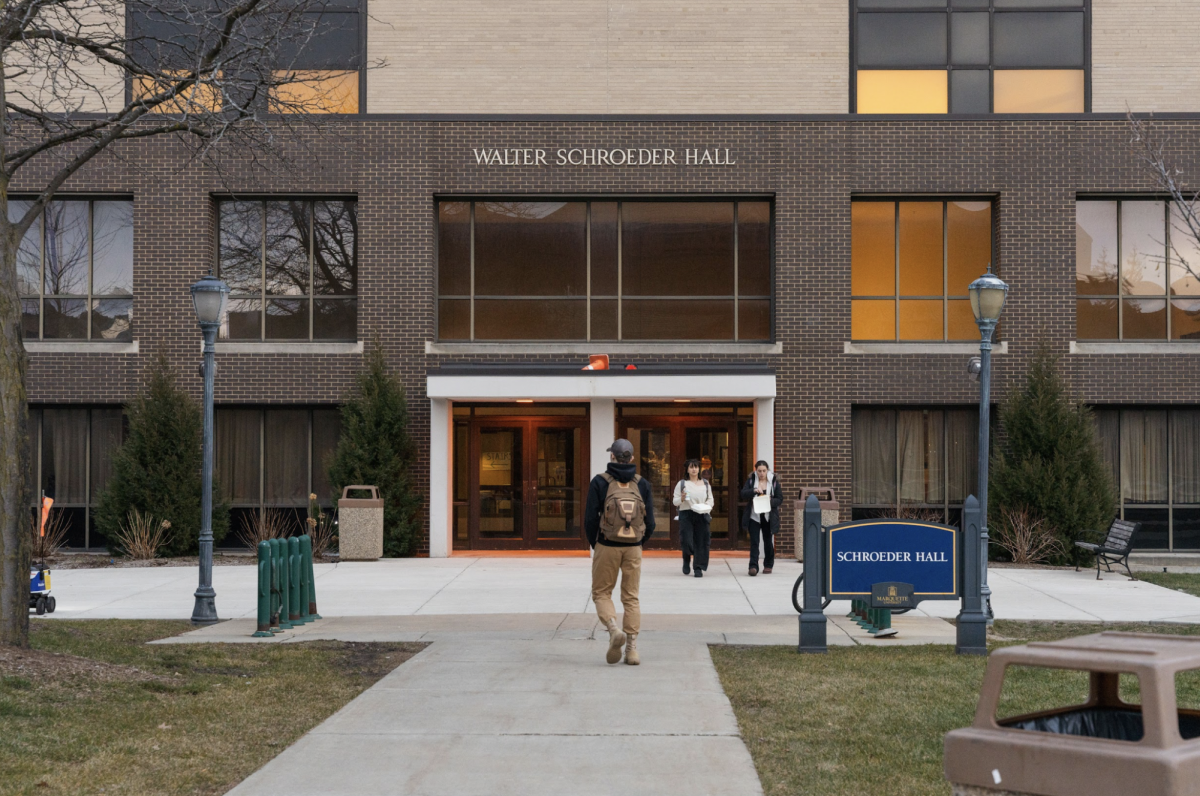
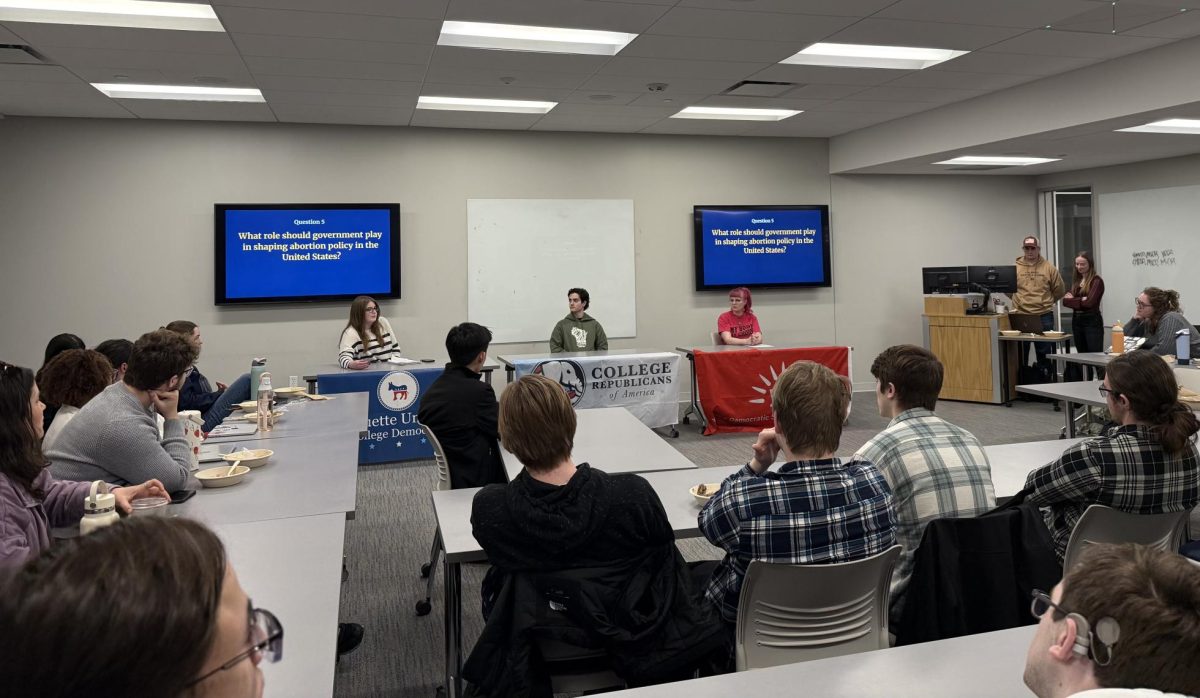
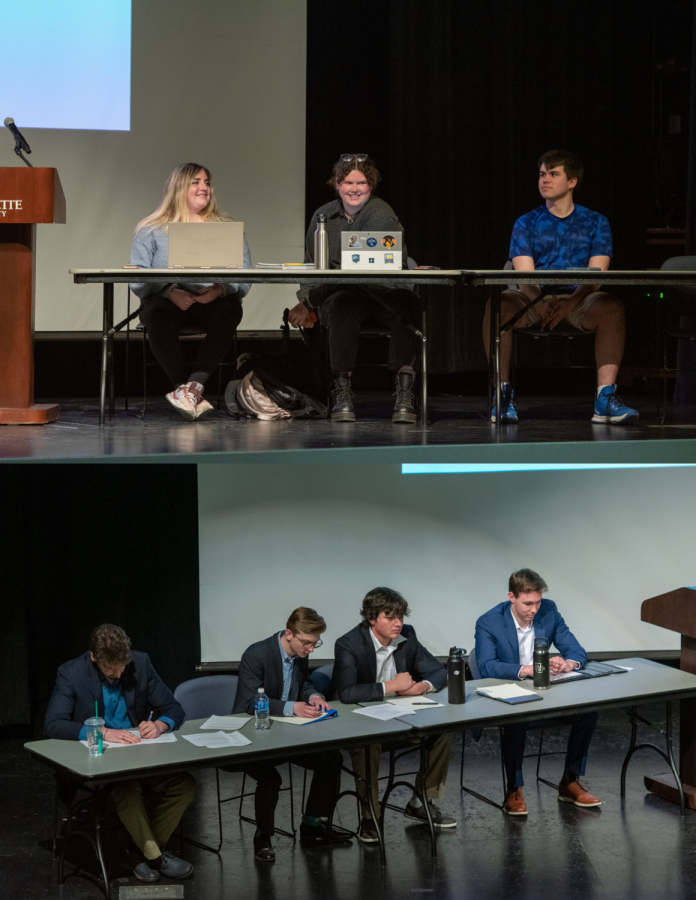
At Marquette University, students hold different views on ICE’s role, practices and its future under President Donald Trump’s administration.
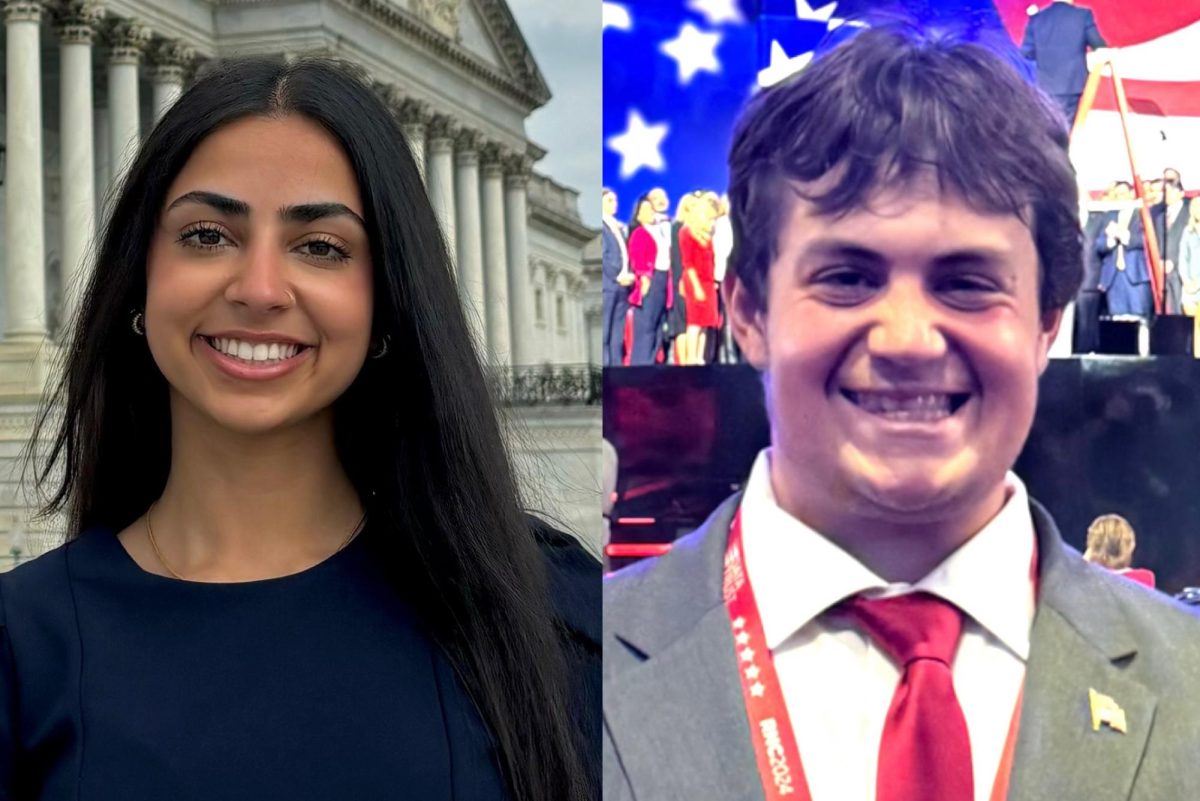
“ICE should be abolished,” Kenny MacAskill, a junior in the College of Arts & Sciences and co-chair of Marquette’s Young Democratic Socialists of America chapter, said.
He feels the organization is being used as a paramilitary force by this administration.
Elliot Sgrignuoli, a senior in the College of Arts & Sciences and president of the Marquette College Republicans, views the agency differently.
“The job itself is important,” he said. “People overlook the safety of the country as a whole, not thinking of people who come into the country to do harm.”
Reactions to recent ICE practices
Since the beginning of Trump’s second term, ICE has detained 68,990 migrants. 25.7% of those detainees have criminal convictions, 25.9% are awaiting charges and 48.4% are listed as “other immigration violators.”
But more than just the numbers are garnering national attention — social media videos of people being taken off the street by masked agents are posted nearly every day.
Natalie Gazzana, a junior in the College of Arts & Sciences and president of the Marquette College Democrats, believes these current ICE actions should lead to eventual legal prosecution of the agents. She also thinks government officials should work toward abolishing the agency.
MacAskill called ICE’s actions the “shocking revelation of what some people in this country can be willing to do with the right amount of propaganda and hate.”
He further described it as neighbors turning against their neighbors in an un-American manner.
“This has never been about legality. This is, I think, solely about control,” Alannah Gallagher, a sophomore in the College of Arts & Sciences and co-chair of YDSA, said.
In September 2025, the Supreme Court temporarily ruled that agents in Los Angeles were allowed to profile based on race when conducting sweeps for illegal immigrants. According to an investigation conducted by ProPublica, a reported 170 legal American citizens have been detained by ICE to date, some left for more than a day without access to a phone.
When asked about the reported detention and deportation of legal Americans, Sgrignuoli referred to these as mistakes, stating that some people get wrongfully taken and the legal process will play out as it’s supposed to.
Contrastingly, Evalicia Reyes, a sophomore in the College of Education, College of Arts & Sciences and a member of Marquette DREAMers — a campus organization dedicated to providing a safe space for students with different documentation statuses — is disturbed by the reported detention of legal citizens.
“They are supposed to be taking away criminals,” Reyes said in an email.
Deaths in nearby Minneapolis
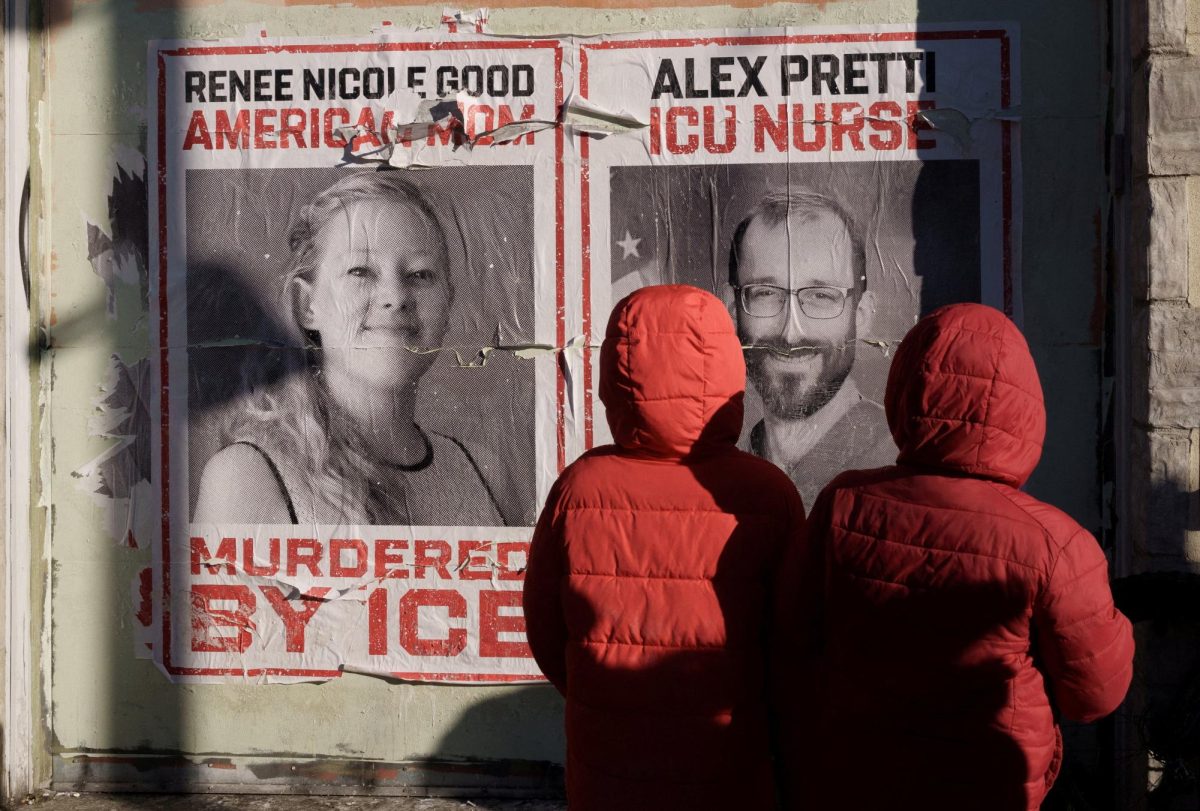
Renee Nicole Good was fatally shot in the head by an ICE agent in Minneapolis on Jan. 7. Her death was officially ruled a homicide on Jan. 23 by the Hennepin County Medical Examiner’s Office.
On the morning of Jan. 24, a civilian protestor identified as Alex Pretti was also shot and killed by an ICE agent in Minneapolis. Pretti was a 37-year-old nurse from Green Bay, Wisconsin.
Gazzana said this violence, especially in the case of Renee Good, has been influenced and overlooked by the president.
Reyes pointed out a disparity in coverage for those who have died in ICE-related incidents. For examples, she said, the death of Keith Porter Jr. — a Black man from Los Angeles who was celebrating the New Year when an off-duty ICE agent shot him — did not receive the same attention as Good’s death.
“This administration has proven time and time again that they are racist and that if you do not agree with their standpoints, they will push you into the shadows,” Reyes said in an email.
Similarly, Gallagher pointed out a lack of accountability from both agents and the administration when it comes to the deaths of people who cross paths with them. It shows a complete disregard for compassion and human life, she said.
But Sgrignuoli said the government isn’t aiming for death; rather, ICE is a federal bureau whose job it is to follow orders.
“It’s not the role of people to go and interfere with the law when they don’t know what’s going on,” Sgrignuoli said. “They don’t have the facts that the agents have on the ground.”
Campus organization efforts
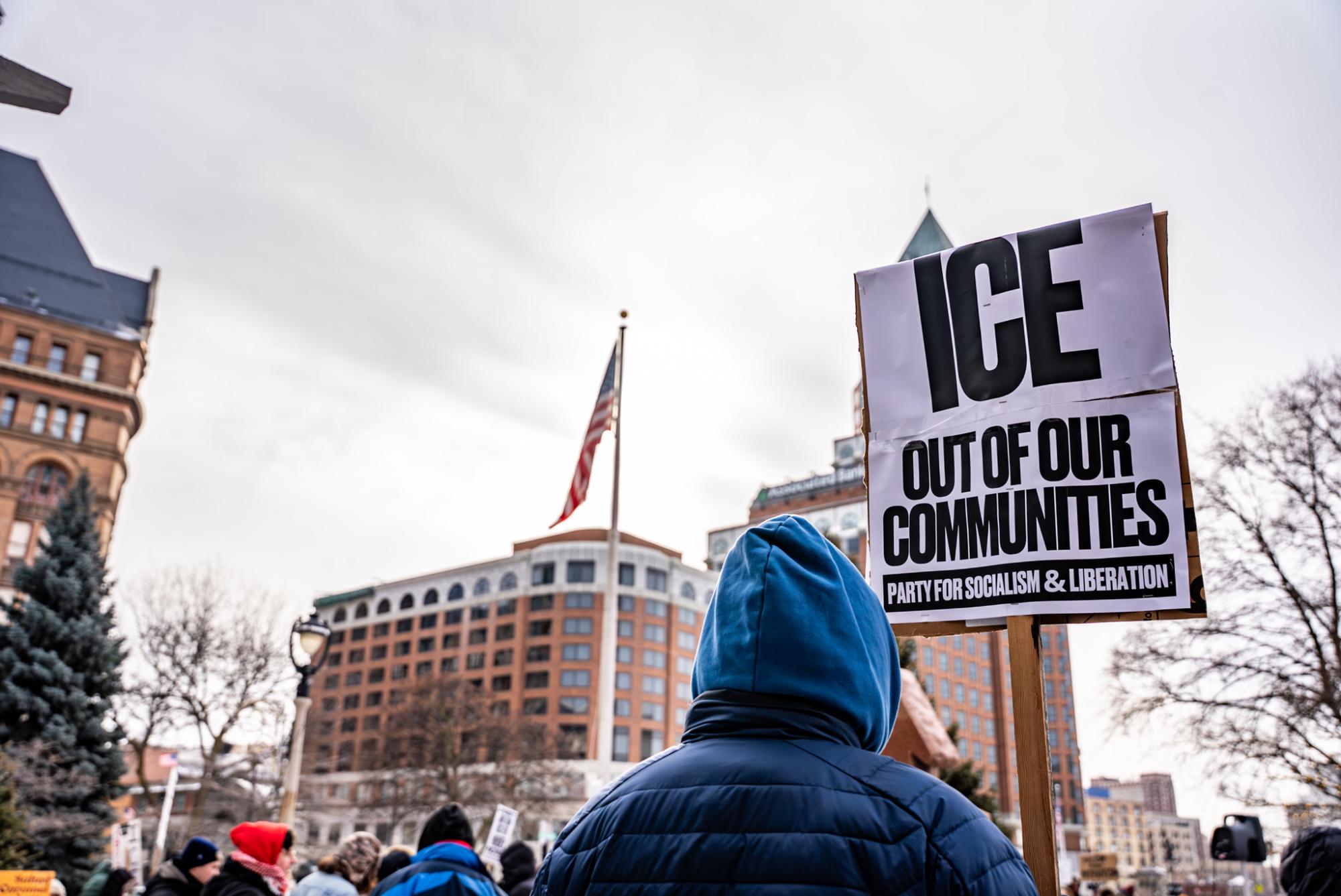
In light of cases like Good’s and Pretti’s, local activists including Marquette YDSA are pursuing ways to ensure protection for both the Marquette and Milwaukee immigrant communities.
MacAskill and his organization are working with YDSA at both the Milwaukee School of Engineering and the University of Wisconsin-Milwaukee to hold campaigns to have their universities designated as sanctuary campuses. They would operate like sanctuary cities, which limit cooperation with immigration authorities by placing restrictions on local law enforcement. Restrictions include reduced cooperation with inquiries about immigration status and limited sharing of information about those at risk of deportation.
Sgrignuoli said there isn’t much the College Republicans can do — or are obligated to do — regarding current ICE actions. Instead, he’s putting his attention toward state elections in 2026, which he expects to have significant political implications.
For the College Democrats, Gazzana said her main priority is to provide refuge for students to share their thoughts and feelings about immigration and the Trump administration. She also hopes students will find ways to empathize with others who are affected by the circumstances.
“Solidarity is one of the most prominent guiding principles of our organization, with whatever work we’re engaging in,” MacAskill said.
Marquette’s policy regarding outside law enforcement is for students to direct immigration officers to the Marquette University Police Department to verify there is a lawful request, where MUPD will then respond as required by law.
Areas which once received protection from border enforcement actions, such as schools, churches and hospitals, are no longer protected under the 2021 Guidelines for Enforcement Actions in or Near Protected Areas Memo, which the Trump administration rescinded in 2025.
“Many communities are living in fear because of the actions that ICE agents are taking,” Reyes said in an email. “Nobody should live in fear of being taken away from their families, whether that is in death or deportation.”
University to develop plan
In light of the recent incidents in Minneapolis, Marquette leadership will gather this week to work through different scenarios regarding a potential ICE presence on campus, General Counsel Ralph Weber said at a Jan. 26 University Academic Senate meeting.
“We’re a Catholic, Jesuit university, and so we’re going to protect it and advance that mission,” he said. “And we need to comply with the law, so we need to find the right path to achieve both of those objectives.”
On Jan. 28, the university will host an Ignatian Examen — a prayerful reflection — from 4 p.m. to 5:30 p.m. in the Alumni Memorial Union Lunda Room for campus body to converse, reflect on faith and respond to recent ICE actions. The Examen will be directly followed by a communal peace Rosary in the Chapel of the Holy Family.
“As a university, we teach, we think about knowledge, but as a Catholic, Jesuit university, we think about all the people in our community and humanity,” Acting Provost Sarah Feldner said at the Jan. 26 meeting. “The Examen feels like a right place to start.”
More resources for the Marquette community in the wake of ICE-related violence are available in a Jan. 26 release from the university.
This story was written by Lilly Peacock. She can be reached at [email protected]. Mia Thurow and Sahil Gupta contributed to this report.