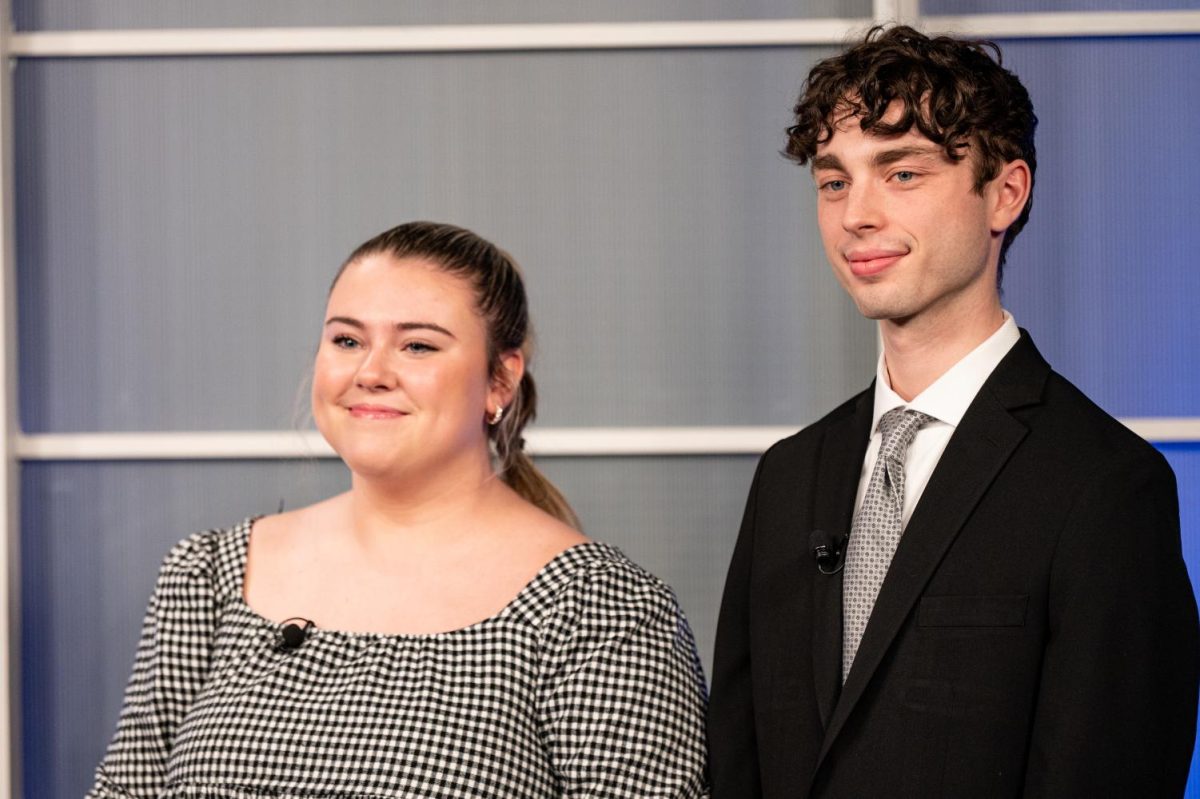

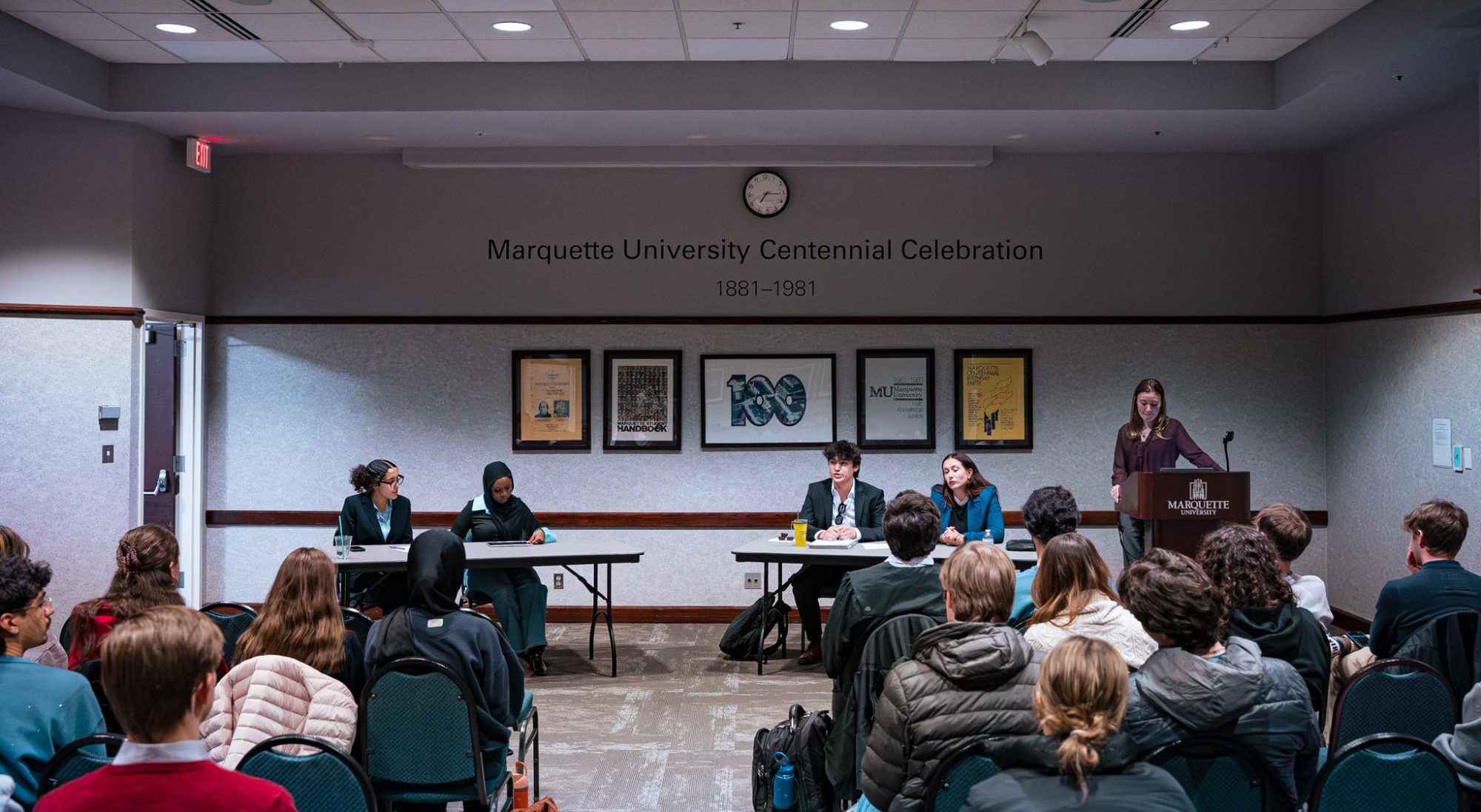
Marquette University Student Government hosted its presidential debate March 23 ahead of the election for student body president and vice president. The election will take place on Thursday through online ballots sent via email.
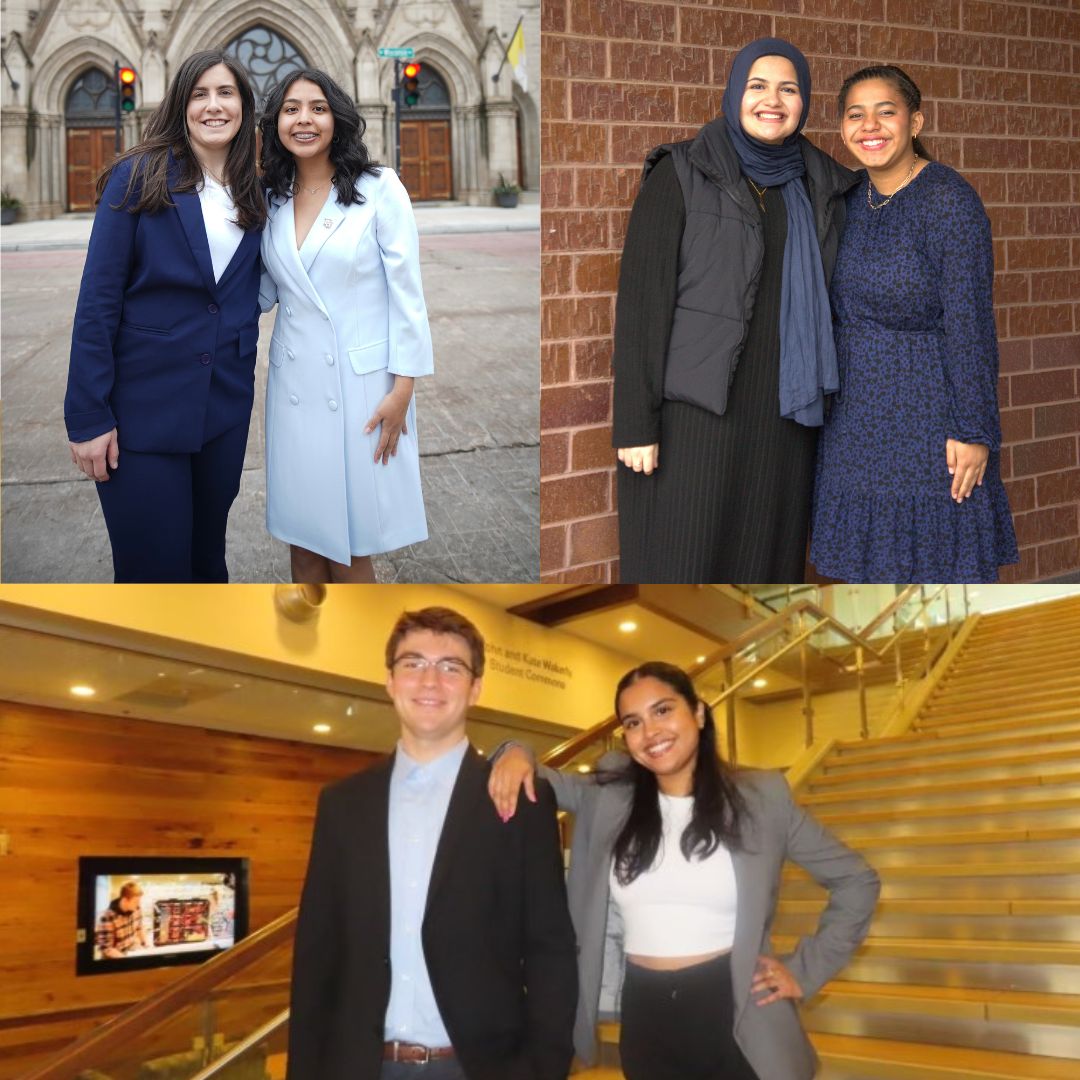
Hawo Mohamed and Aya Khayati, both juniors in the College of Arts & Sciences, make up one ticket. Mohamed and Khayati have both been involved in MUSG since their first years at Marquette. Mohamed authored a menstrual product bill in 2024 that put free menstrual products in Straz, the Alumni Memorial Union and Raynor Library.
The other ticket includes Jacob Ricard, a junior in the College of Business Administration, and Rae Dakins, a junior in the College of Arts & Sciences. Both have been involved in student government for three years. In his time at MUSG, Ricard has started a grocery access committee and an LSAT prep course initiative.
Monday’s debate was an opportunity for candidates to share their initiatives and campaign platforms for the upcoming term with members of the student body. Candidates were asked eight questions in front of dozens of students at the debate in the AMU.
Tickets share overarching visions
Mohamed, who took the floor first, said she wants to adopt a better student organization funding process and improve communication between students, campus and faculty. This would help ensure students are content with their campus experiences and know who to contact when they are not, she said.
Ricard and Dakins spoke on the disconnect in communication between Marquette students and the university administration and said there is room for improvement.
“We live on a campus where we have great organizations, great students and a great education,” Ricard said. “But at the same time, it feels like every decision made by Marquette is made for students instead of with students, and that’s something that we really wanted to change.”
He said he and Dakins are trying to have a holistic approach to solving problems by going to students and seeing what they really want. An example of their problem solving includes formalizing student input in major administrative decisions.
Improving the student experience
Ricard said in order to give students access to a stronger pre-law education, he and Dakins hope to create an LSAT preparation course. This will allow students a more affordable course option rather than paying out of pocket, which can cost well over $3,000, Ricard said. As a law studies student herself, the initiative is personal for Dakins.
The Ricard-Dakins ticket also spoke about making grocery options near campus more affordable, especially for those without access to a car. They plan to accomplish this through periodic on-campus pop-up grocery and meal markets partnering with local vendors, nonprofits and food distributors, according to their campaign website.
“You shouldn’t have to sacrifice rent for food,” Dakins said.
Mohamed and Khayati are focused on raising wages on campus for student workers. The average student wage at Marquette is $11.88 an hour, the university told the Wire in February. Student employment wages at Marquette range from $7.25 an hour to $18.75 an hour, depending on the skill and responsibility of the job. Additionally, campus jobs have a 20-hour weekly cap.
The ticket’s desire for a raise in wages follows a protest for a student union and better working conditions organized by the Young Socialist Democrats of America in Feb. 2026.
“I know students who have had to rely on loans or credit cards just to cover basic living costs when financial aid or paychecks fall short,” Mohamed said. “That’s the reality for some people, and it creates constant stress in the background of their academic life.”
Gaining student body engagement
To ensure students are engaging with campus organizations, Ricard and Dakins hope to fundraise and strengthen support for the Student Engagement Committee within the Outreach Department. Both said they have already begun doing this through their involvement in Greek and residence life.
Mohamed and Khayati, if elected, said they would hold monthly open forums to update students on what they are accomplishing as student body president and vice president. Weekly MUSG meetings are already open to all students.
After speaking to various campus organizations during her ticket’s campaign, Mohamed said she and Khayati concluded that there is a need for more students to be involved in these organizations. With more student participation comes more diverse viewpoints, she said, which reflect the student body as a whole.
“Participation also helps students feel a sense of belonging,” Mohamed said.
For both duos, the goal is to get more students participating in student organizations and MUSG in order to create a strong campus community where student’s voices can be heard.
Supporting underrepresented groups
Both tickets have been working to allow for more prayer spaces on campus, particularly for non-Christian students. The current Muslim prayer space in the AMU is not large enough to facilitate the number of students using it, leading to lines out the door and students being late to classes.
As a commuter, Mohamed also said she wants to create more inclusive spaces for commuter students. She said she knows many commuters who feel as though they need to go to class and then straight home after.
“I think that shouldn’t be the college experience for people who don’t live on campus,” she said.
Currently, there is a commuter student lounge located in the AMU.
Bolstering campus safety, transparency
In addition to allocating funding for another Eagle Express van, Ricard and Dakins said, they would aim to ensure MUPD is more transparent when safety incidents occur on campus.
“I’m sure we all get those alerts saying there’s a threat on campus,” Ricard said. “But what does that really mean?”
Mohamed and Khayati also said they want to reintroduce a past bill allowing students to flag down Eagle Express vans as they are passing by rather than having to wait for a ride through an app.
Campus health and wellness
In his closing statement, Ricard said one of the largest issues at Marquette has to do with contraceptives. His plan includes expanding access to sexual health resources and contraceptives by offering free or low-cost contraceptives, as well as take-home STI testing kits through campus health services and discreet distribution points.
In 2016, Marquette University was ranked the least sexually healthy college in the country.
“I think it’s really important because we do have a sexual health crisis on this campus,” Ricard said.
Mohamed and Khayati agreed that more campus resources need to be dedicated to sexual health.
Both tickets also mentioned their hopes to update the attendance policy regarding sickness. Currently, Marquette’s policy does not count sick days as an excused absence. Mohamed said due to a health diagnosis of her own, it can be difficult to make it to class every day.
“I know the majority of us in this room have heard the term ‘cura personalis,'” she said. “We can’t take care of the whole self if Marquette isn’t giving us a chance to take off days.”
The election for student body president and vice president will take place on March 26. Students will receive a digital ballot in their university email inbox. Election results will be released on Friday.
This story was written by Mina Marsolek-Bonnet. She can be reached at [email protected].