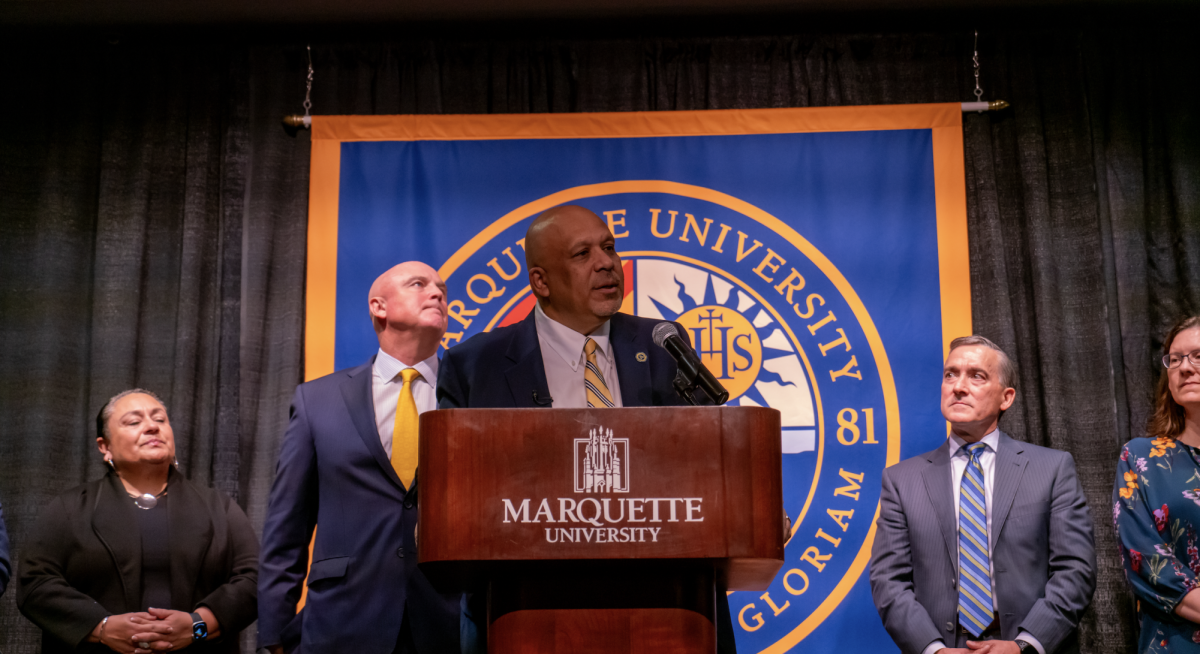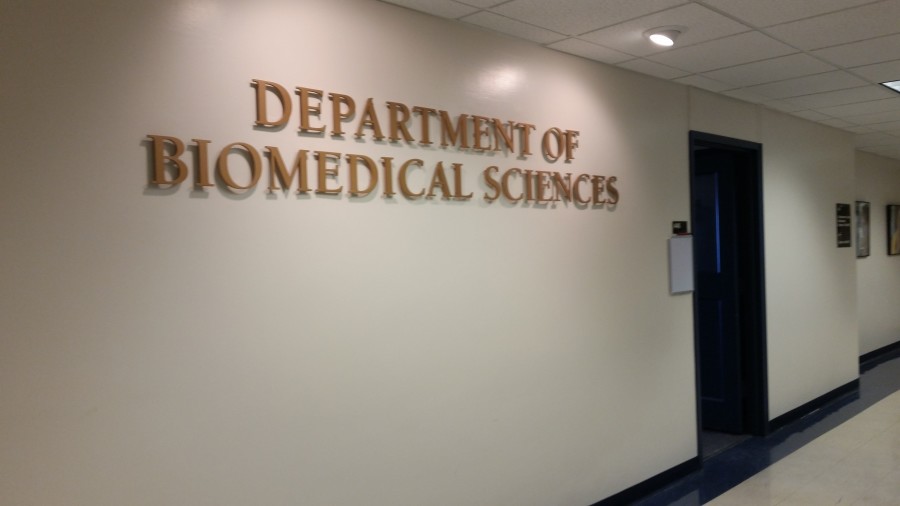

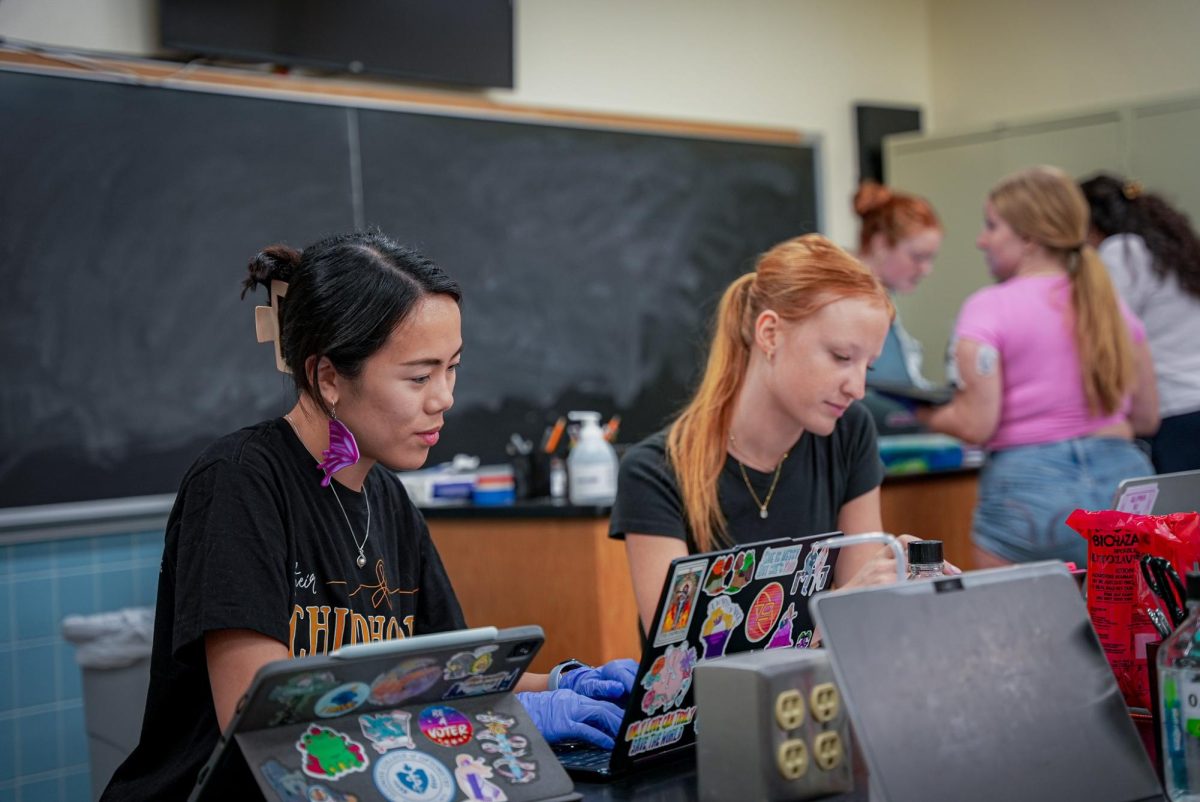
Marquette University faculty voiced concerns about how possible college restructuring models could negatively impact their colleges at a Nov. 17 University Academic Senate Meeting.
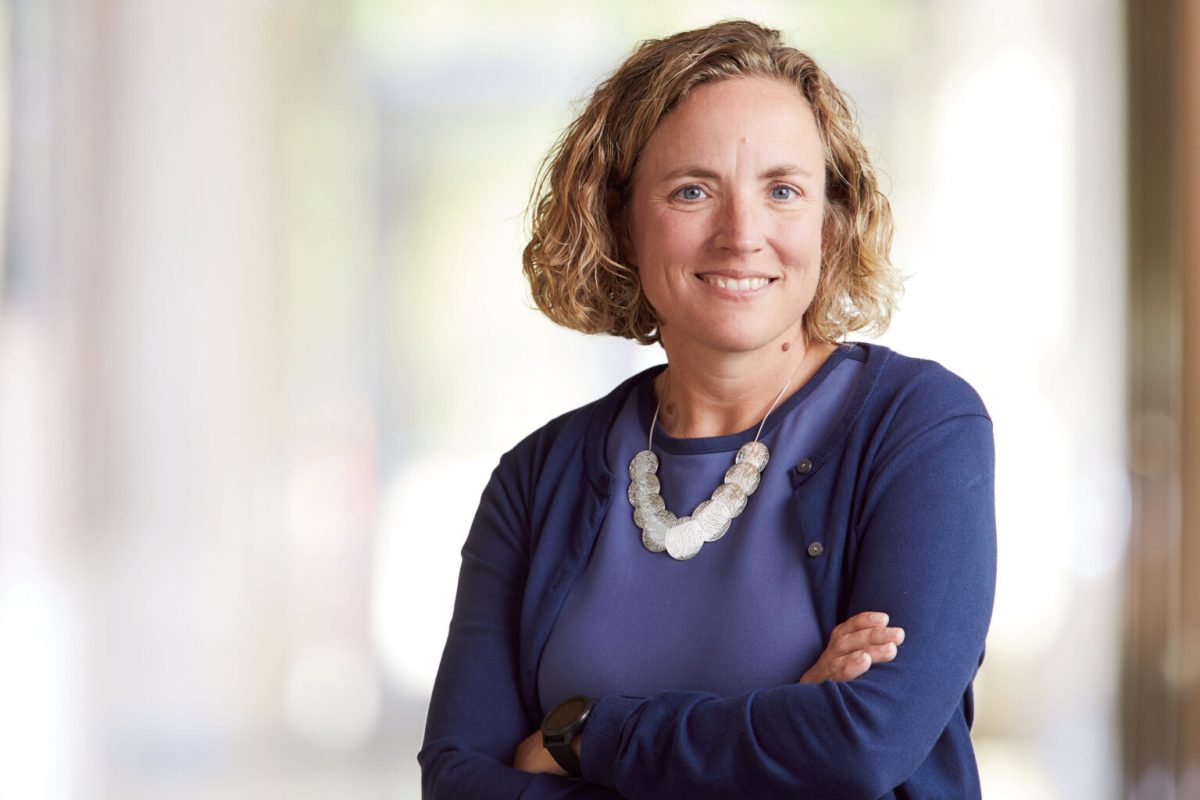
Acting Provost Sarah Feldner, who was tasked with leading the college restructuring initiative, was not in attendance for the meeting. However, UAS Chair Paul Gasser fielded questions from faculty about the process and its potential ramifications.
“I believe that this process has identified things that should be done,” Gasser said.
Concerns came primarily from faculty in the College of Arts & Sciences, the college that would be the most impacted by the three models released to the Marquette Wire on Oct. 24. A fourth model would keep the current structure the same.
None of the models make any changes to the Graduate School, Law School, School of Dentistry or the College of Nursing. All three of the models move departments out of Arts & Sciences into prospective colleges based on disciplinary similarities.
Here are some key remarks from the Nov. 17 UAS meeting:
Faculty feel initiative lacks clear purpose
Several faculty members expressed concerns that the university has not provided clear reasoning behind the proposed restructuring models. Ben Pladek, professor of English, expressed his opposition to the initiative in a statement on behalf of Arts & Sciences faculty.
“The reorganization has no clear purpose, goals or return on investment,” Pladek said. “It feels like too big of a risk for no obvious reward.”
This sentiment was echoed by theology professor Andrew Blosser, who felt he couldn’t clearly see positive outcomes from any of the proposed models.
“It’s almost as if we are scientists at Area 51, given spaceships and being told to figure out how they fly,” he said.
In an interview with the Wire earlier this semester, Feldner said the restructuring would generate smaller operational savings. But, if the university gets to the end of the decision-making process and significant cost savings aren’t realized, the initiative will not proceed.
Concern over collaboration, Jesuit identity
Faculty also argued that the proposed restructuring models make it more difficult for students to double major, counteracting the university’s Catholic, Jesuit mission to provide students with a well-rounded, holistic education.
Many students choose to double major in both professional and humanities disciplines, a decision Pladek said makes them more appealing to employers. But if the humanities majors were split up into colleges other than Arts & Sciences, he said, it would make double majoring harder than it already is.
“The reorganization will damage existing collaborations in the College of Arts & Sciences and lead to siloing and turf wars in the new proposed colleges,” Pladek said.
Pladek’s feelings were shared by Rosemary Stuart, professor of biology, who said employers expect students to have interdisciplinary degrees.
“There is a lot of potential to create more interdisciplinary programs and make use of who we are as a liberal arts, Jesuit university,” she said.
Suggested changes to current financial model
One of the factors faculty said contributed to a lack of students double majoring is the current funding allocation model at Marquette, known as 70/30. Under this model, 70% of a student’s tuition is given to the college that houses their primary major, while 30% is distributed to other colleges that a student takes courses in.
Several faculty members, including Spanish professor Sonia Barnes, said this inadvertently forces colleges to compete for academic loyalty from students.
“When you have the current financial structure, every college and every department wants to be [a student’s] first major,” Barnes said. “If we change the financial model in a way that is more equitable across colleges, we can think more creatively and allow students to do cross-college double majors.”
Marquette University Student Government Senator Hannah Frain, a senior in the College of Communication, provided a student perspective at the UAS meeting. In regard to double-majoring, she expressed optimism about changes to the existing financial structure.
“Allowing more students to partake in double majors would be very beneficial,” Frain said.
University looking toward the future
Gasser did not spend much time speaking about the restructuring models at the Nov. 17 UAS meeting; rather, he encouraged faculty to continue having conversations with their colleagues about the best way to move forward.
“We should talk about what’s going on now and what should go on in the future, whether we reorganize or not,” Gasser said. “It will make this place function more like a university.”
This story is part of an ongoing series from the Marquette Wire regarding the university’s budget cuts and fiscal situation. If you’re interested in discussing your thoughts or program, please reach out to the Managing Editor of the Marquette Tribune at [email protected].
This story was written by Sahil Gupta. He can be reached at [email protected].