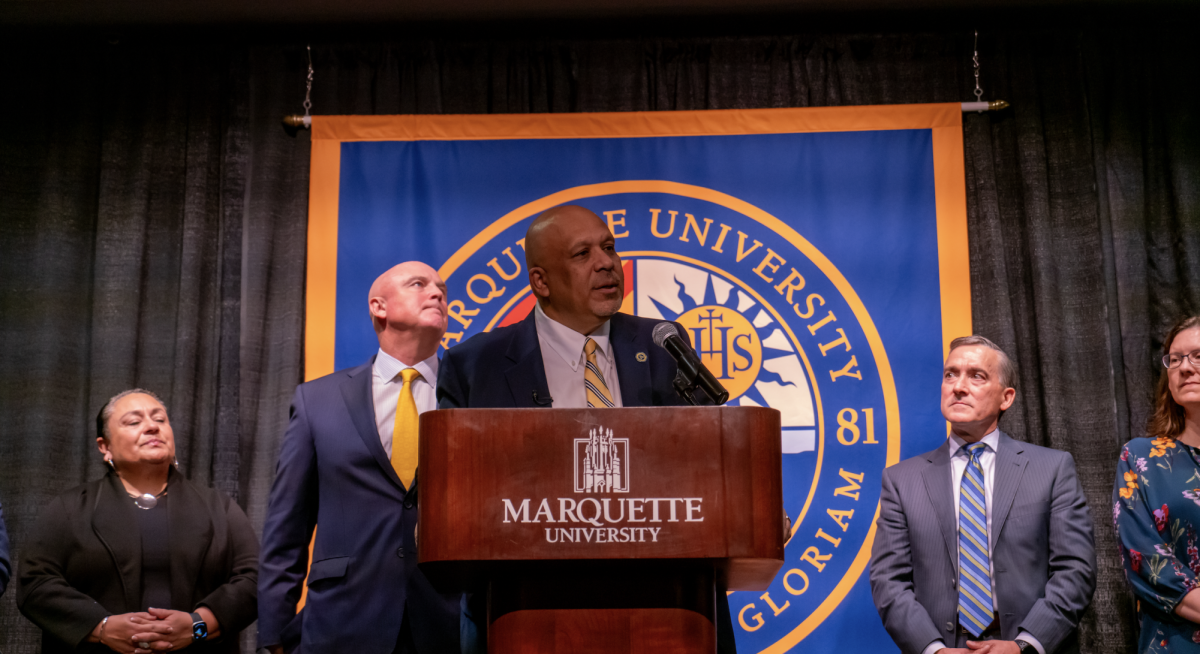

Marquette University released three possible college restructuring models to the Marquette Wire on Oct. 24.
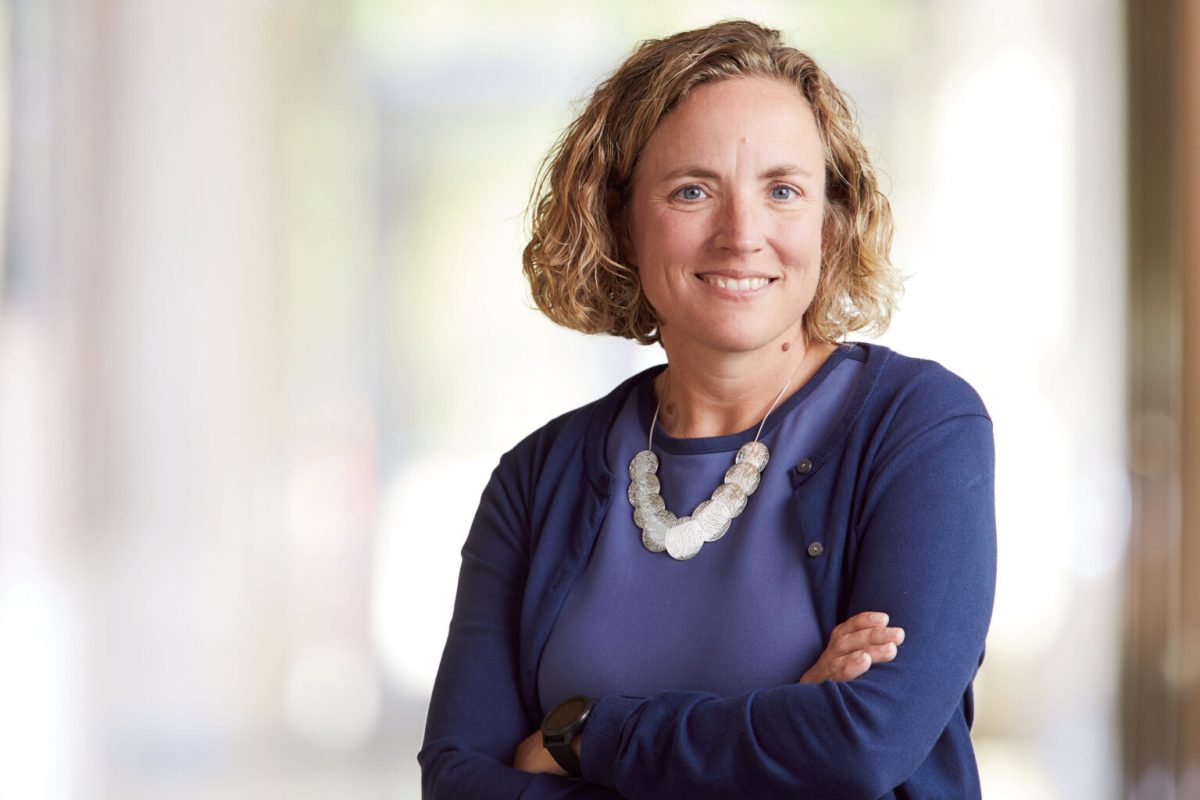
Acting Provost Sarah Feldner has been tasked with leading the process — which was initiated as a cost-saving avenue for Marquette as it plans to cut $31 million from its budget by 2031.
These changes would reorganize colleges across the university and move departments. The process could begin as soon as Fall 2027.
The university is hosting in-person viewing sessions over the next week for faculty to look at the models and provide feedback.
What do the models look like?
Three models were created with input from faculty — collected during listening sessions — and finalized by Feldner.
A fourth model is keeping the current structure the same. This option would be enacted if Feldner gets to the end of the decision-making process and determines it’s the best course of action.
None of the models made any changes to the Graduate School, the School of Dentistry, the Law School or the College of Nursing.
Model “Blue”
This model combines physics, computer science and mathematical and statistical science with engineering departments. The theme of combining these two disciplines is echoed through the other models, too.
This structure also takes some other departments from Arts & Sciences, like biological sciences and chemistry, and moves them in with health science departments.
This model is the most similar to the current structure. It doesn’t make any changes to the College of Communication.

Photo courtesy of Marquette University.
Model “Gold”
This model creates a college where Communications and Arts & Sciences departments such as English, history and philosophy fall under one roof. It’s similar to model “Blue” as it moves some Arts & Sciences majors into colleges with engineering or health sciences.

Photo courtesy of Marquette University.
Model “Aqua”
Similarly to the last model, model “Aqua” also combines the humanities with all communication departments. Other departments from Arts & Sciences like chemistry, biomedical sciences, psychology and computer science, would again be combined with either engineering or health sciences.

Photo courtesy of Marquette University.
What are some common themes?
While looking at each model, however different, they each include some similar changes.
All three are moving departments out of Arts & Sciences and pairing them with similar disciplines. Currently, Arts & Sciences is Marquette’s largest college with 2,541 undergraduates and 291 faculty.
The aqua and gold models combine all communication departments with humanities and languages. In both structures, that prospective new college would be the largest.
Feldner told the Wire during an Oct. 24 interview that the original goal of the restructuring wasn’t to move Arts & Sciences departments to different colleges.
“There is so much concentration, a change is going to have to run through [Arts & Sciences] because of the extent to which it has such diverse disciplines,” she said.
Each of the three models combines engineering with STEM departments. Paul Gasser, chair of University Academic Senate, told the Wire on Oct. 24 it was a natural move. The hope is that students will be able to work together on research or projects, he said.
“Engineering shares a lot of students with the STEM disciplines in Arts & Sciences,“ Gasser said. “Putting them together might allow for more collaboration.”
Feldner explained that putting the humanities and sciences under more distinct umbrellas might help students who aren’t sure of which major to pick, making it easy to try new things.
When will a decision be made?
Here is the timeline Feldner announced at the Oct. 20 UAS meeting:
- Feldner will present the models to University President Kimo Ah Yun in December
- During the 2026 spring semester, the model will be evaluated by teams from individual colleges
- The model will be reviewed by shared governance bodies such as UAS and other faculty committees
- The model will be presented to the Board of Trustees in April for approval
- With approval, college deans and the provost’s cabinet would spend summer 2026 planning integration
- From fall 2026 to fall 2027, the process of implementation would begin
How will these changes cut costs?
In the beginning of the restructuring process Feldner said there will be “modest” cost savings that would contribute to the $31 million university-wide budget cuts.
“If you don’t have as many colleges, you don’t need as many administrators or deans,” she said.
But this doesn’t mean faculty will be cut; Feldner said those administrators or deans can be moved elsewhere.
When faculty leave the institution, Feldner said if their role seems to have a duplicate, the university would decide not to look for a replacement.
If one of these models are chosen, Feldner said the curriculums will stay the same. Further down the line, she said departments themselves can decide if they want to make a change.
“There are some departments that teach very similar things; They may decide there’s some advantage of not duplicating,” Feldner said.
In terms of class sizes, she said they would stay the same. However, the restructuring would prioritize subtracting class sections that aren’t at capacity.
Why do they matter?
When asked why students and faculty should participate in discussions around college restructuring, Gasser said it’s about coming together in a time of uncertainty in higher education.
“It’s an exciting way to have a conversation about how Marquette responds to those times,” he said. “We can tell the story of why we go to college at a time like this, and why Marquette.”
Feldner said during the process, the university is using student exit surveys to try and understand how to create a better university for prospective students.
“At the end of the day, a strong Marquette is the value of your degree,” she said.
This story is part of an ongoing series from the Marquette Wire regarding the university’s budget cuts and fiscal situation. If you’re interested in discussing your thoughts or program, please reach out to the Managing Editor of the Marquette Tribune at [email protected].
This story was written by Sophia Tiedge. She can be reached at [email protected].
Lance Schulteis contributed to this report.