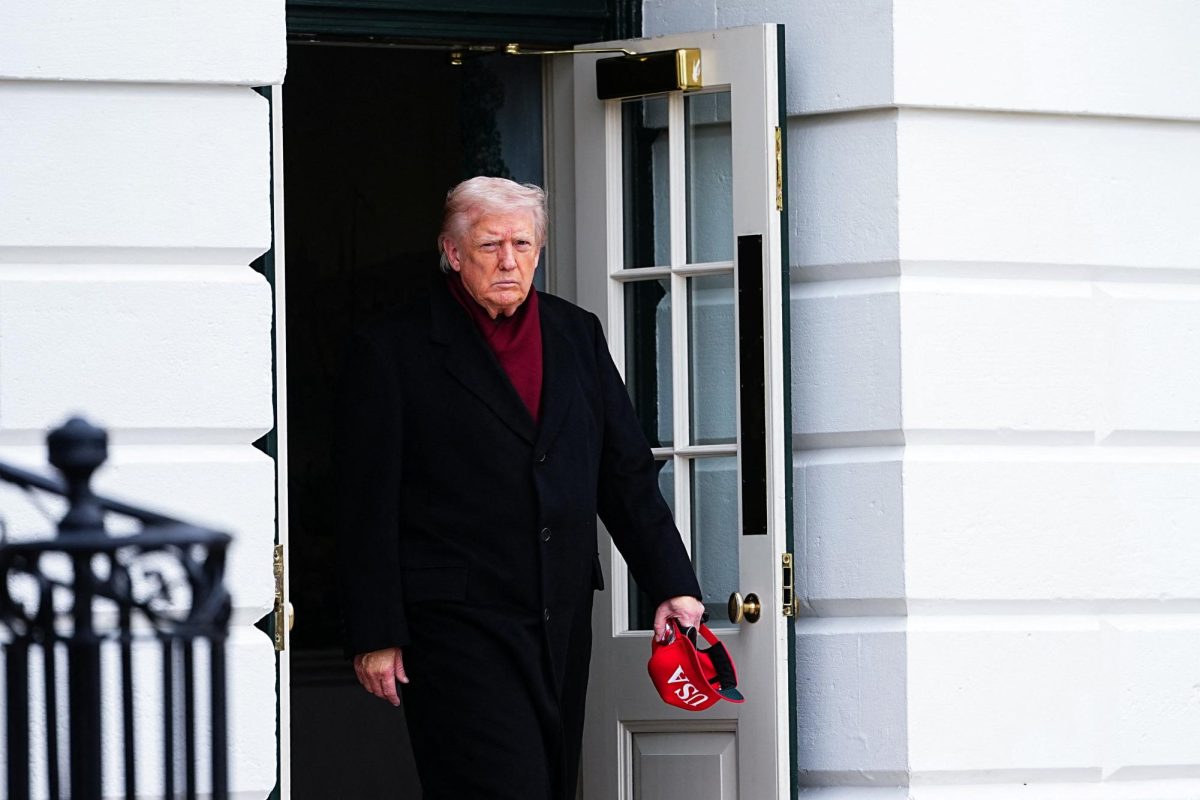


As the federal government enters its third week of a shutdown, Washington, D.C., is looking more and more like a ghost town. Federal office buildings have locked their doors, the Smithsonian museums are inaccessible to tourists and landmarks normally bustling with thousands of visitors each day sit quietly with their doors closed and halls empty.
Marquette students at the Les Aspin Center for Government have not been spared. When the federal government shut down on Oct. 1 — after Republicans and Democrats failed to reach an agreement on a new federal budget — 750,000 federal workers were furloughed.
This includes four Les Aspin students interning on Capitol Hill.
Marquette’s Les Aspin Center — where students live, study and work in Washington, D.C., for a semester — has a cohort of eleven students this semester from eight majors and three academic colleges.
Students hold internships at a variety of institutions including policy think tanks, non-profit companies, bureaucratic agencies and congressional offices.
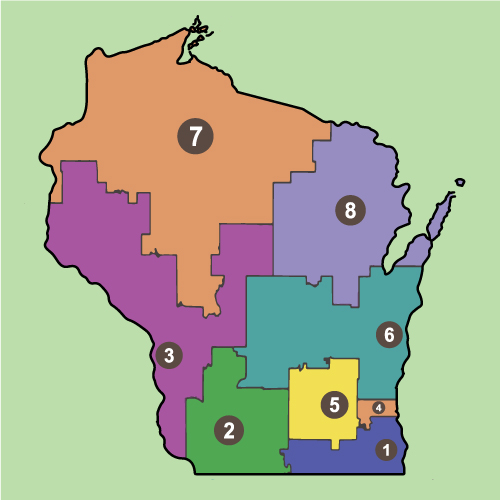
Nathan Stevens, a junior in the College of Arts & Sciences, was hired this fall as an intern in the office of Democratic U.S. Rep. Gwen Moore who represents the 4th district of Wisconsin.
Stevens started his internship on Sept. 2 knowing that a government shutdown was a possibility. Now, he’s unable to work.
Some of his day-to-day duties included managing Moore’s daily schedule, attending briefings on her behalf and answering calls from constituents.
“[Talking to constituents] really did give me insight into how Congress works, and how representatives answer to their constituents,” Stevens said.
Paul Nolette, director of the Les Aspin Center, said that the shutdown has provided an opportunity for students to network with other furloughed federal workers as well as develop an understanding of the nuances of managing the federal budget.
“Students — like everyone else who’s watching this — are frustrated by the lack of movement,” Nolette said. “But it has become a part of regular politics in Washington when it comes to the budget.”
Nolette did, however, acknowledge the challenges that might arise if the shutdown drags on. In particular, students’ required internship hours.
“It has been at the top of my mind to make sure that students are getting the hours that they need and having the experience they came here for,” Nolette said.
The Les Aspin Center has been collaborating with the “Wisconsin in Washington” program through the University of Wisconsin-Madison to organize career panels, volunteer opportunities and other networking events. The center has also been in talks with other institutions about finding students alternative internship placements if the shutdown continues into the coming weeks.
While the situation progresses, Stevens acknowledged that he is in a much better situation than many of the thousands of furloughed federal workers who are not getting paid.
“Many government employees are going to miss out on paychecks, and I worry about them more than I worry about myself,” he said.
Stevens also emphasized that the shutdown has not changed his view of public service, saying he still wants to pursue a career in either policymaking or diplomacy. In this era of political polarization, he said shutdowns are sometimes inevitable.
“If I were too afraid of this happening, I wouldn’t have come to D.C. at all,” Stevens said. “I hope to go into policymaking in my career and this is how it is. This is a downside of it. But I have not changed my resolve.”
This story was written by Sahil Gupta. He can be reached at [email protected].