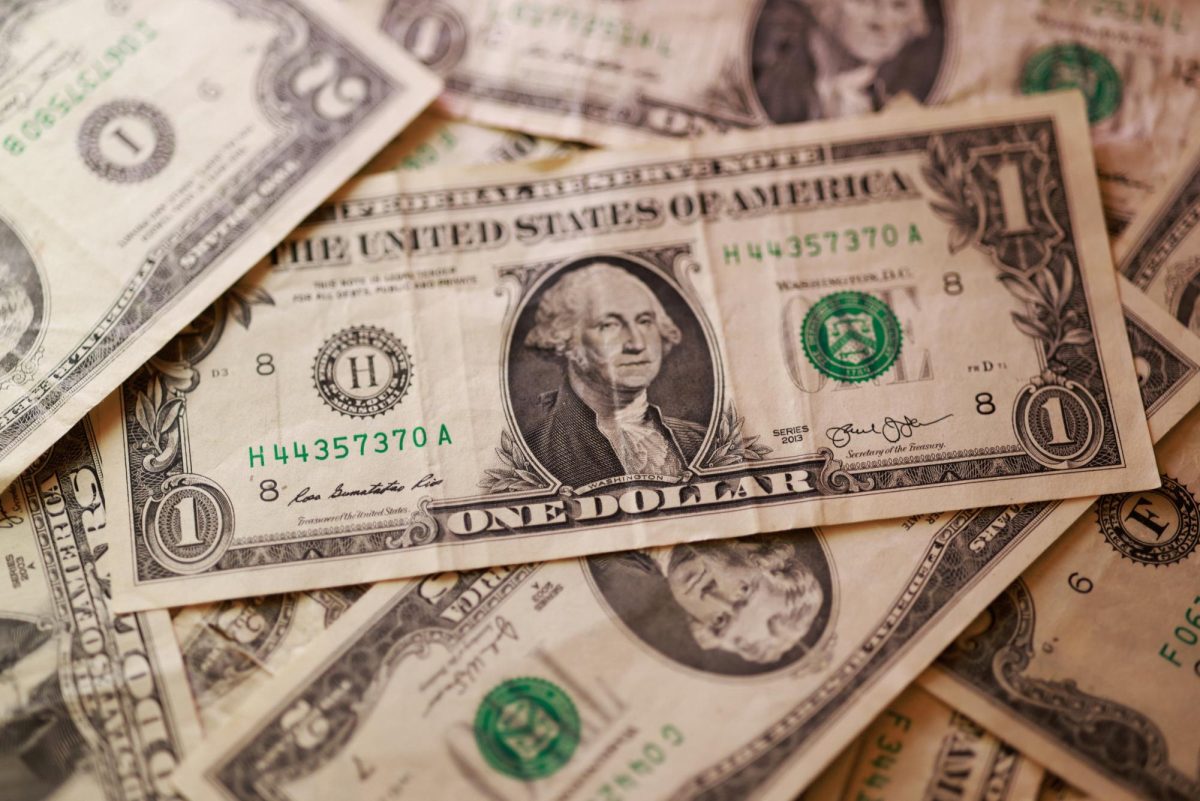
The U.S. Department of the Treasury announced on March 26 that President Donald Trump is adding his signature to U.S. dollar bills — the first time a sitting president’s signature will go on paper currency. This decision is unnecessary and blurs the line between institutional function and personal political promotion.
The purpose of putting Trump’s name on the bills is to honor America’s 250th anniversary, but the currency has had the signatures of the treasury secretary and the treasurer since 1861.
In a statement, Treasury Secretary Scott Bessent called Trump the “architect of America’s Golden Age economic revival” and said putting his name on the bills is appropriate and well-deserved. However, this decision breaks years of tradition and serves as an unwarranted endorsement of the current president.
U.S. paper currency is a major national symbol that is circulated daily. It is a reflection of how our institution functions, not an item to politically validate a current leader. By tying his identity to the currency, he’s politicizing something that should always remain neutral.
According to Reuters, the first bills with Trump’s signature will be $100 bills and will be printed in June.
The decision has drawn public criticism, along with a federal commission’s approval to design a 24-karat commemorative gold coin with Trump’s image on it. The Commission of Fine Arts, consisting of all Trump-appointed members, voted on March 19 to approve the design, which, once again, intends to honor the 250th anniversary.
Both cases raise legal concerns, considering how federal law prohibits the depiction of a sitting or living president on U.S. currency. The 1866 Thayer Amendment prohibits the use of any living person’s image on “the bonds, securities, notes or postal currency of the United States.” However, the treasury secretary may have the authority to bypass and allow Trump’s signature on bills.
Additionally, the 2005 Presidential $1 Coin Act states that coins cannot have an image “of a living former or current president, or of any deceased former President during the 2-year period following the date of the death of that President.”
Federal laws have set clear boundaries, and Trump is overstepping them.
He’s already renamed federal buildings and institutions after himself, such as the U.S. Institute of Peace — now the Donald J. Trump Institute of Peace — and The Kennedy Center — now The Donald J. Trump and the John F. Kennedy Memorial Center for the Performing Arts.
Honoring figures in such a way comes from respecting a historical legacy, after they have passed. It should not be used as an opportunity to promote one’s political power.
Putting Trump’s signature on U.S. currency is just another self-aggrandizing action and one that would set an upsetting precedent. Personalizing currency could carry on into future presidencies and would turn a national symbol into a reflection of whoever is in power. Theoretically, the signature could just change with each new president. It would undermine our stability as a country and negatively impact public trust.
The role as president is not supposed to be treated as a business model, trying to mark everything with one’s personal branding, name, image or likeness. Trump’s ego does not give him an excuse to ruin 165 years of U.S. tradition. Our government is not considering the serious implications these decisions could have.
Some lines — especially the ones on our money — should not be crossed.
This story was written by Rachel Lopera. She can be reached at [email protected]