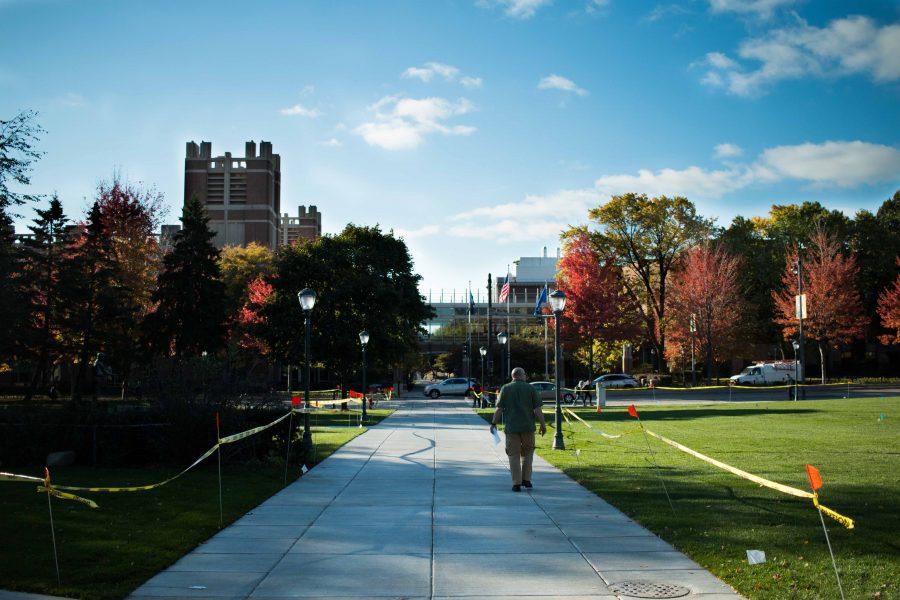

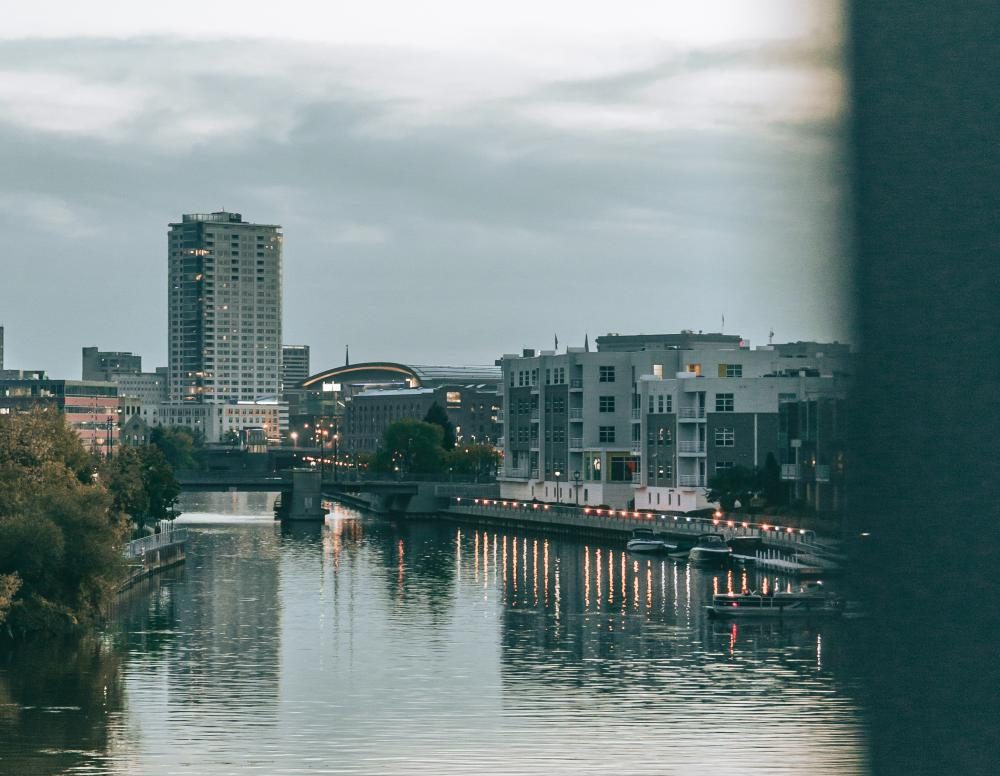
There are many exciting places to explore around Milwaukee, but they often require some form of transportation. With many neighborhoods and suburbs expanding outwards from the heart of the city, the metropolitan area has become unwalkable.
Other walkable cities have been proven to benefit social well-being, but the reliance on vehicles in Milwaukee is detrimental to social health. A study by researchers from Texas A&M University found that cities with pedestrian-centered neighborhoods have a greater sense of community and higher overall social cohesion compared to automobile-centered neighborhoods, which limit social interaction.
High reliance on automobiles can reduce people’s chances of socializing while walking outside, leading to a sense of isolation and anomie.
In terms of crime, some communities are disadvantaged in their ability to walk from place to place, as it is unsafe. A study conducted in Louisville, KY found that denser, more walkable neighborhoods facilitated greater civic engagement, resulting in lower rates of property crimes, murders and violent crimes.
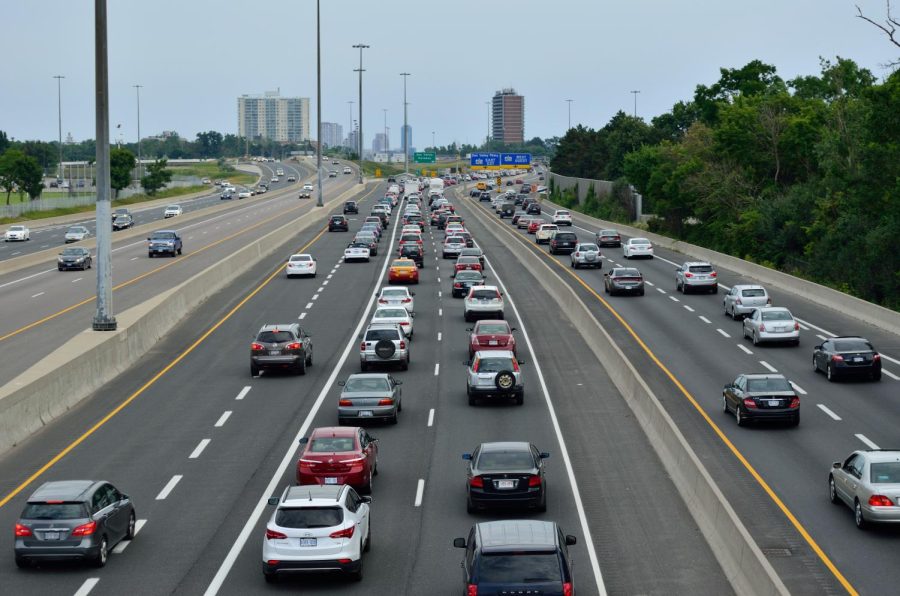
Aside from social disadvantages, frequent use of motor vehicles emits an excessive number of harmful emissions that can lead to health issues. Many pollutants are produced by combustion in vehicles, but particulate matter (PM) is the most harmful in Milwaukee due to the city’s reliance on vehicles and large industrial areas.
PM consists of minuscule particles made of toxic chemical compounds that can easily enter the lungs and bloodstream. The US Environmental Protection Agency (EPA) explains that frequent inhalation of PM can cause heart or lung disease, nonfatal heart attacks and increased coughing or difficulty breathing.
These risks disproportionately impact lower-income communities, as many are near parts of Milwaukee that surround industrial sectors such as Menomonee Valley, the Brewery District or Butler. Considering that 60% of PM emissions come from heavy vehicles, low-income households near industrial areas are at high risk for health issues.
If Milwaukee’s neighborhoods were more walkable, there would be less disparity between low-income communities in high-risk areas and those without high PM concentrations.
Along with health consequences, an unwalkable city structure is not sustainable for financial reasons. One might think that this can be easily solved with public transportation or rideshare services, but these are not accessible to all.
The cost of basic transportation needs, such as getting to work, school or running errands, can add up over time. A Milwaukee bus pass costs $2 for a daily pass or $75 for a monthly pass. This may not seem costly, but someone could save $75 a month walking to and from essential locations.
Conversely, using a rideshare service such as Uber or Lyft to commute daily can become costly. By spending $10-$20 a day to commute, this adds up to hundreds of dollars a month, which is not a sustainable price for everyone.
For low-income communities, the World Economic Forum claims that the lack of affordable housing and homelessness is greatly induced by scarce “walkable urban land, coupled with exclusionary drivable suburbs.”
Consequently, if Milwaukee does not address the matter of walkability, housing insecurity and unemployment rates will continue to rise.
While some Milwaukeeans may be comfortable with their reliance on automobiles, they must consider how it burdens other citizens. If Milwaukee does not try to create safe, accessible ways to walk around the city, there will continue to be detrimental repercussions on the city’s standard of living.
To accomplish this, Milwaukee must create more pedestrian-friendly sidewalks that are in both neighborhoods and downtown areas. The city must also develop safer bike lanes that are easily recognizable to drivers. By doing this, people will feel more comfortable walking or biking, and they will find an appeal in walking over driving.
It is unrealistic to entirely remove cars from our roads, but other U.S. cities have adapted their roads to become pedestrian-centered. Portland, OR is notorious for this, as the city has focused on the development of smaller roads with downtown areas containing anything that the average person would need to walk to—from grocery stores to dry cleaners.
For the sake of Milwaukeeans, the city must put people first when developing the city. Milwaukee must prioritize walkability within its neighborhoods in order to create a more sustainable future for the city’s health and communities.
This story was written by Bella Gruber. She can be reached at [email protected]