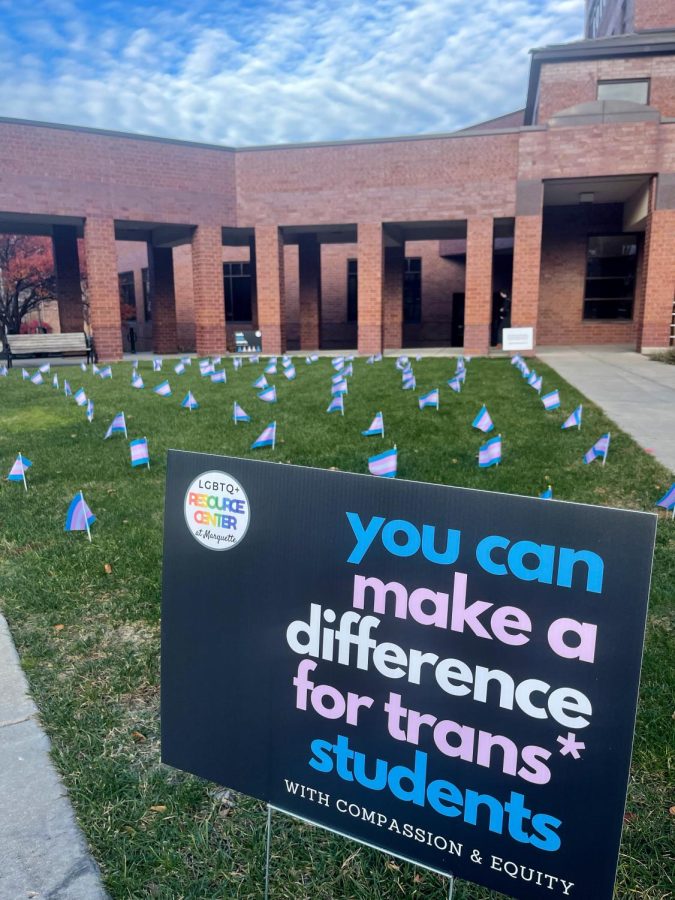

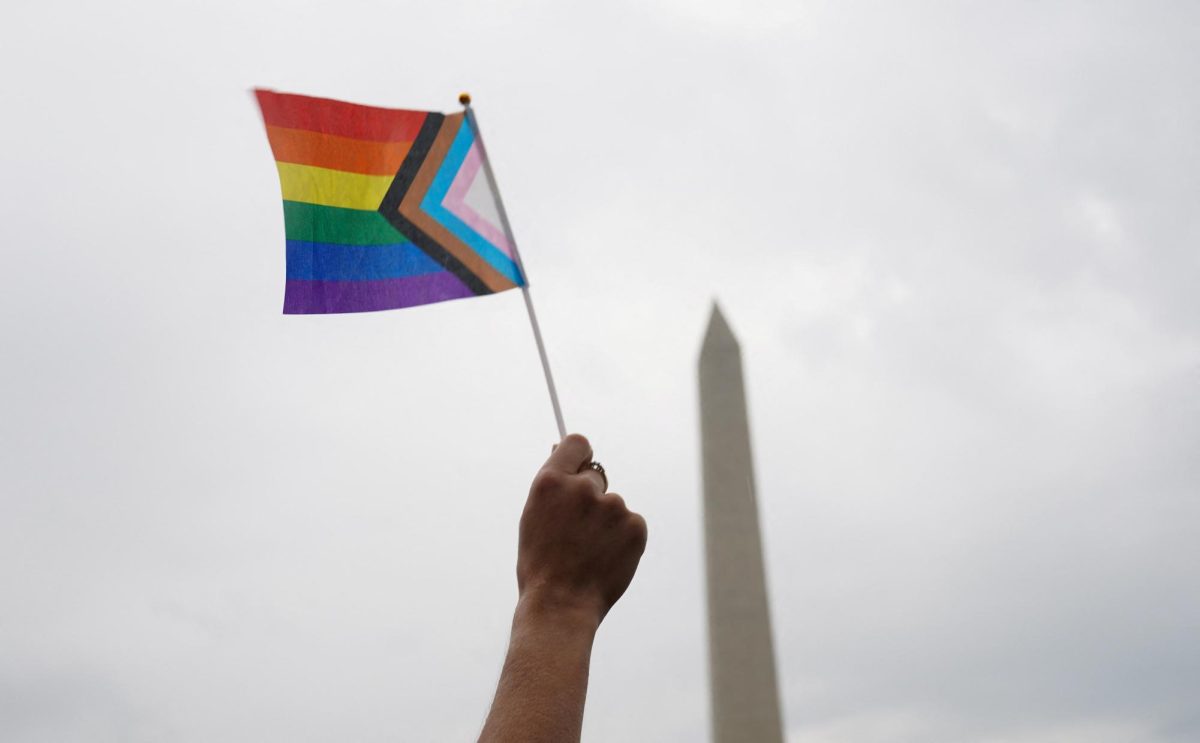
Across America, an increasing number of school boards have passed policies to restrict LGBTQ+ narratives in recent years. Implementing policies that exclude students’ identities and reject the idea of gender entirely silences LGBTQ+ students and puts all students at a disadvantage.
616 anti-LGBTQ+ bills were introduced in the United States in 2025, and individual districts have adopted policies that suppress the identities of their students. Additionally, the Trevor Project found that 44% of LGBTQ+ young people reporting their school has at least one anti LGBTQ+ policy. Many bills that restrict LGBTQ+ people’s rights emerged as Diversity, Equity and Inclusion efforts were dismantled by President Trump, primarily in red states.
Some laws and policies target transgender students by prohibiting them from using appropriate bathrooms and participating in school sports. Others censor the LGBTQ+-related content permitted in curricula, known as “don’t say gay” laws.
Arrowhead High School District in Waukesha County, Wisc. passed a policy — “Restoring Biological Truth” — on July 9, 2025, which prohibits all courses from discussing “gender ideology” and requires all communications, policies, documents and questions about gender to be replaced with “sex.” The policy goes so far as banning all employees from including their preferred pronouns in email signoffs, among other restrictions.
At a school board meeting on March 11 in Hartland, Wisc., some students from Arrowhead High School’s Gay-Straight Alliance spoke out against this policy. Some students explained their experience hearing derogatory terms on a regular basis at Arrowhead, describing this policy as a “gamble with students’ lives.”
They also expressed the danger of compelling staff to turn away LGBTQ+ students who confide in them.
Watertown School District in Jefferson and Dodge Counties, Wisc., also passed a “gender support” policy. This policy indicates that parents must be notified if their child seeks to be called a different name or use different pronouns from their assigned sex, and staff members may decide if they would like to use the student’s preferred name and pronouns. Parents are left with little input in how their child is addressed and students have no power over the information shared with their parents.
While the Wisconsin Department of Public Instruction has provided guidelines on the importance of creating an inclusive educational environment for LGBTQ+ students, these districts have directly ignored their instructions.
Most often, these policies are adopted following feedback from parents and community members.
These policies blatantly reject the validity of LGBTQ+ students’ existence, which may lead to increased bullying, harassment and discrimination against them. In turn, LGBTQ+ students may feel uncomfortable expressing themselves authentically in the classroom, leading to feelings of inferiority and insecurity.
These policies claim to ensure safety and privacy among students, but they really foster feelings of discomfort and ostracism by alienating LGBTQ+ students.
Among a historically vulnerable group that is 2.5 times more likely than heterosexual individuals to experience anxiety, depression and substance misuse, anti–LGBTQ+ school policies put students at risk of experiencing these issues early on. These individuals must navigate their identity, social challenges and relationships during adolescence, so policies invalidating their existence in schools adds another unnecessary layer of challenges.
Conversely, the Trevor Project’s U.S. National Survey on the Mental Health of LGBTQ+ Young People found that 54% of transgender and nonbinary students consider their schools gender-affirming, supporting their identity. Consequently, fewer considered attempting suicide among this percentage.
On a state level, Wisconsin Governor Tony Evers vetoed five restrictive LGBTQ+ Republican bills on March 31, International Transgender Visibility Day. These proposed bills would have restricted trans students’ access to school sports and gender-affirming healthcare. Evers says he will continue to veto bills that make Wisconsin “less safe, less inclusive and less welcoming place for LGBTQ people and kids.”
A study from the University of Pittsburgh also discovered that providing LGBTQ+-inclusive sexual education is associated with less bullying in their LGBTQ+ students, and in effect, less suicidal thoughts and depressive symptoms for these individuals. Offering inclusive courses like this is imperative to self-discovery.
Schools must provide students with the resources they need to discover their identity and feel comfortable engaging in a learning environment. Using students’ preferred names and pronouns is only a fraction of the respect schools must give their students. Public K-12 education seeks to educate all students equally to prepare them to achieve their goals in adulthood.
Excluding the LGBTQ+ community in a school setting only perpetuates longstanding discrimination, hindering these individuals’ livelihoods at a young age. K-12 schools must value their students’ unique identities, not suppress them.
This story was written by Bella Gruber. She can be reached at [email protected].