

Over a fifth of Marquette University’s student body are first-generation students, who have to learn and navigate college without the help of parents who previously attended a higher education institution.
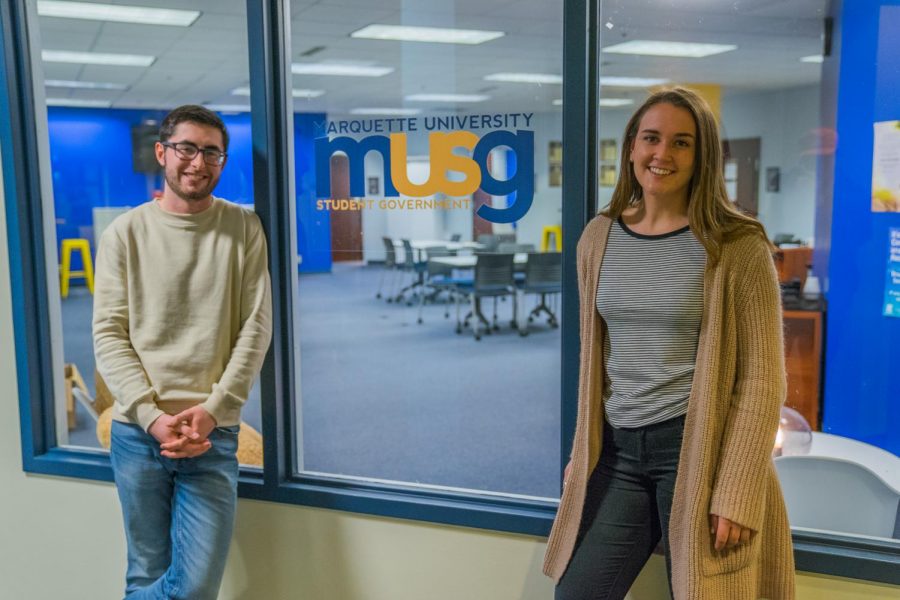
Some first-generation students — like Titus Konley and Emmanuel Arevalo — attribute their success to the resources Marquette offers through the Office of Inclusion and Belonging. These campus programs, teachers and student organizations have allowed them to make connections and progress through college, they said.
Konley, a sophomore in the College of Engineering studying mechanical engineering, from Waukesha and is the middle child of his family. He has dreams of working in the Navy as a nuclear engineer.
Coming to Marquette, his dad was against the idea of college and pushed him to go to trade school. His mom told him to do what would make him happy.
“I didn’t want to do a trade my whole life,” Konley said. “I need to develop some technology; I really wanted to do something.”

Entering his first year, he began to find clubs and people he enjoyed. He joined the Marquette Symphonic Band and has played the tuba for the group since.
Some of Konley’s high school friends initially helped him find his footing on campus, he said. Now, he’s found additional friendships through studying engineering.
“It’s been a learning process,” Konley said.
Konley also talked about his first-generation struggles with finding the right schedule. He took 20 credits a semester and tried to participate in Track & Field. After learning to create a schedule that worked for him, he became a resident hall assistant at Wells Hall and found more time to focus on academics and band.
Arevalo, a junior in the College of Communication, is pursuing a major in advertising and hopes to work in a comfortable position at a firm in the future.
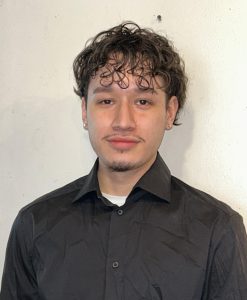
He was born and raised in Milwaukee and comes from a Mexican immigrant family where his parents’ encouragement was strong.
“I think that’s what really inspired me. From a young age, they always pushed me and told me to pursue an education and get a career,” Arevalo said.
In addition to the advertising program and proximity to home, Arevalo was also drawn to Marquette’s Jesuit values, which aligned with his religious beliefs.
When discussing the university’s role in his success on campus, he pointed to his first year of college. The summer before starting at Marquette, he and a group of students came to live in the dorms, take classes and see what the campus had to offer, like the Educational Opportunity Program. The EOP aims to motivate and support low-income and first-gen students.
“We already started off with a couple of credits,” Arevalo said. “A little head start.”
Arevalo keeps himself busy on campus with intramural soccer and the EOP. He said the program has given him a leg up in academics.
One of his biggest motivators is his professors, who he said inspire him, push him to do better and give space for mistakes.
“We can always ask questions or if we need help; we can always go to their office hours,” Arevalo said.
Arevalo also holds himself to a high standard — he wants to succeed and feels the only way to do that is to have the desire to better himself and accomplish big things.
He also acknowledged a change in himself over time. He said he was quiet and kept to himself his first year and has since opened up a lot, enjoying meeting new people.
“Keep working hard, because everyone feels alone at times and feels like they’re the only one going through it, but at the end of the day, everyone’s going through the same thing,” Arevalo said as a message to incoming first-year and first-generation students.
Sarah Piñón, director of the Office of Inclusion and Belonging at Marquette, said her purpose is to make campus a place where all students belong. Though she focuses on underrepresented student populations, the office’s programming is accessible to all students.
“When we benefit one population, that benefits everybody,” Piñón said.
According to Piñón, just over 20% of the student body are first-gen students who come from diverse backgrounds. She said some students proudly claim their identity, while others don’t. Because of that, she said, OIB’s goal is to create a space where students can get support without publicly disclosing their status.
OIB has several programs geared toward first-gen students, like RISE, a program where students receive upper-level student mentors to help navigate campus early during first-year orientation.
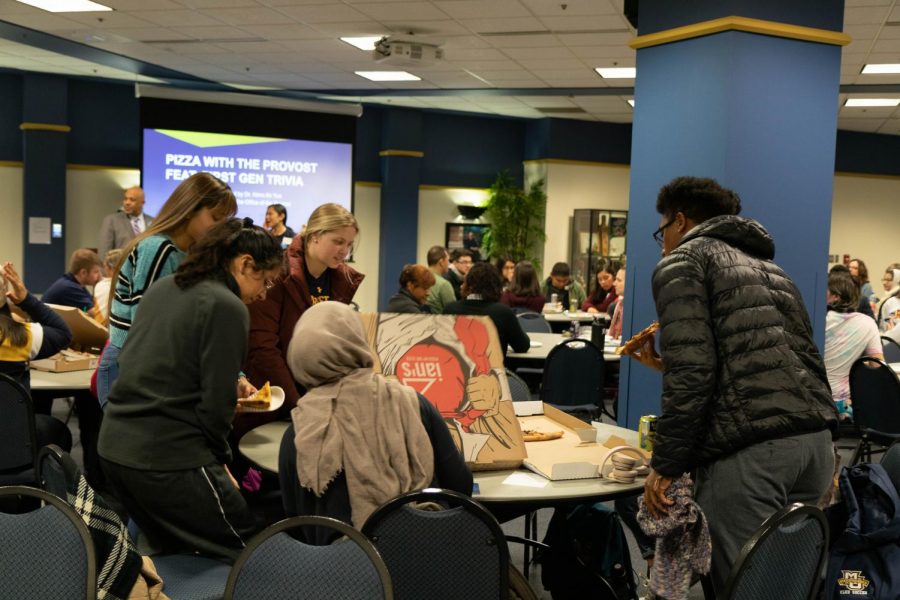
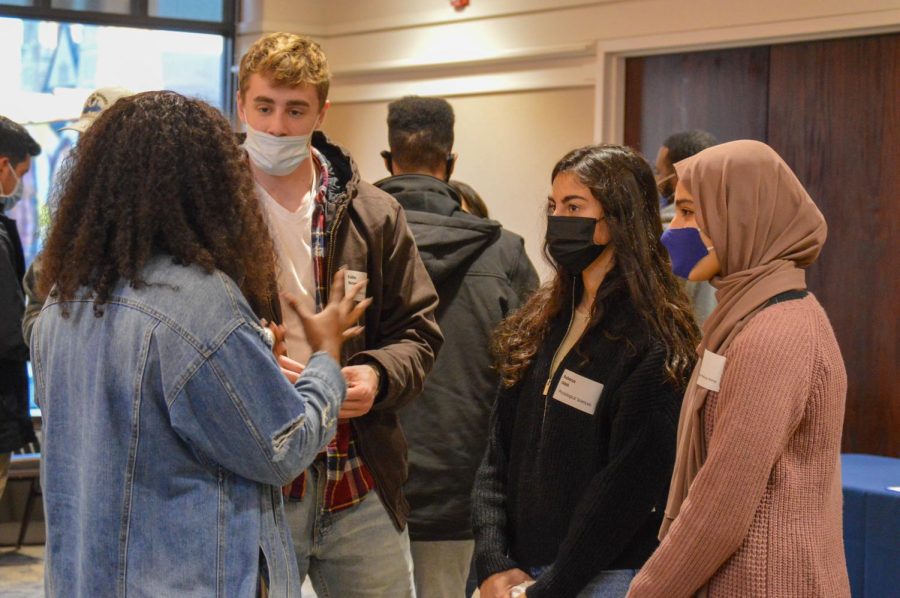
The office also does a monthly series that brings together students, faculty and staff for different educational topics, called the First Gen Collective. Areas of focus have included time management, and mixer events.
Spaces like the Center for Engagement and Inclusion and the LGBTQ+ Resource Center offer students spaces to study, eat, access support or even just relax, Piñón said.
“Those are also spaces we want first-gen students, all students, to be able to just hang out,” Piñón said.
Konley and Arevalo said the mix of these resources and their own perseverance has helped them make it at Marquette.
“This place is telling me that I am meant to be here. I am a representation of this place too,” Piñón said of how she hopes first-generation students feel at Marquette.
This story was written by Lillie Martin. She can be reached at [email protected].