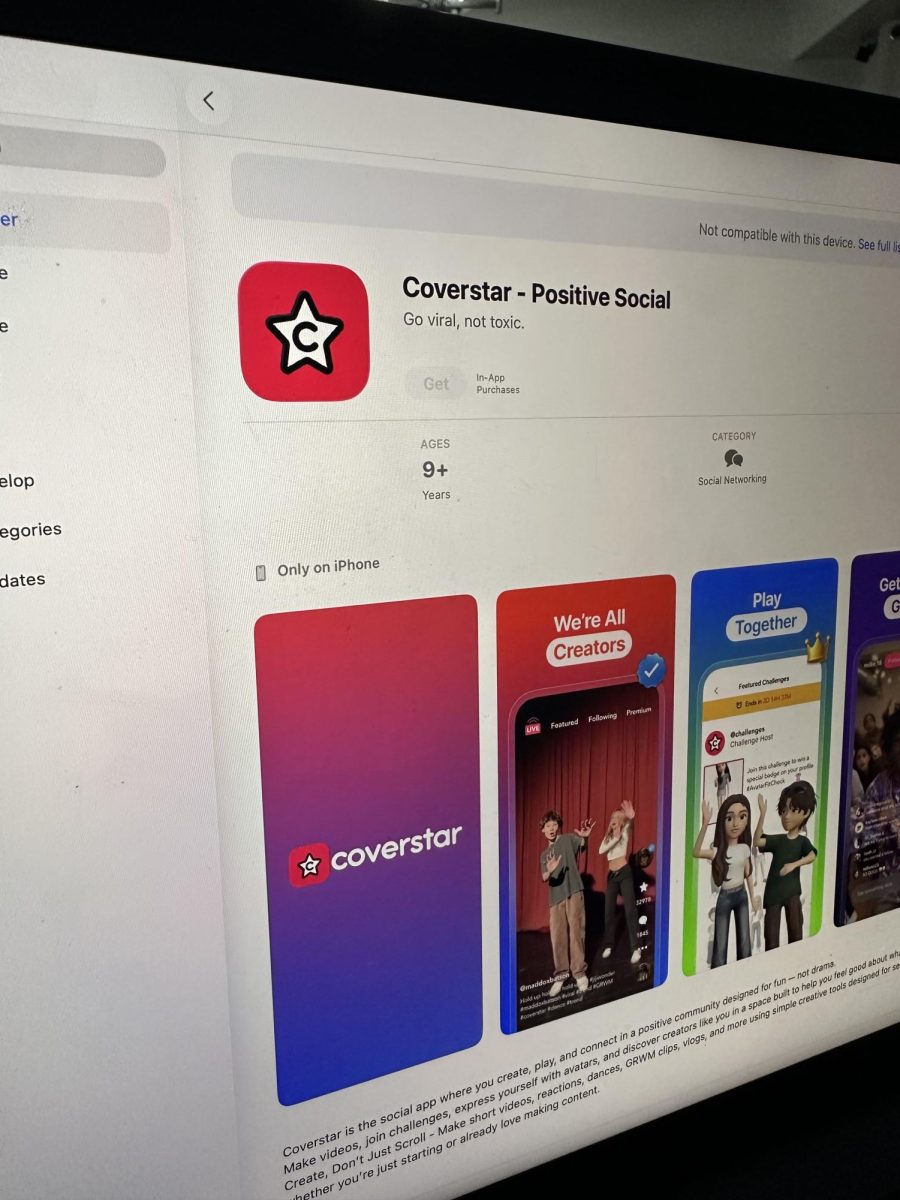
A highly evolving tech world comes with dangers for youth, making it crucial for parents to moderate content. The social media app, Coverstar, demonstrates progress in protecting youth digital safety by providing individualized communities.
The app can be described as a safer version of TikTok, circulating short videos of dances, trends and challenges, and is intended for ages 9-15. Created in 2021, it was made to give kids an appropriate social media space as other adult-targeted platforms like TikTok and Instagram foster mindless scrolling, contain online predators and circulate harmful content. It is intended to feel like an adult platform but have additional safety measures.
According to the American Academy of Pediatrics, the overuse of digital media can cause behavioral issues, sleep problems and delay social skills, exemplifying the need for a platform that discourages technology addictions.
Additionally, about 19% of youth have “sexted” or sent a sexual photo to another person, which predators can find through media platforms and use for exploitation. So, it is crucial that kids use social media apps with their privacy and safety in mind.
While it is agreed-upon that inappropriate content is harmful and that kids should be protected from digital predators, mainstream platforms’ attempts to enforce these ideals have fallen short.
For example, TikTok’s safety regulations can be easily bypassed. The app requires users to be at least 13 years old, but this is often ineffective because children can simply submit an incorrect birthday, appearing to be older.
To protect youth from online predators, TikTok has made direct messaging inaccessible for users under 16 years old. Yet this fails when users lie about their age.
These inconsistencies highlight the need for a more suitable platform for kids and teenagers, and Coverstar is filling that gap.
The app effectively addresses issues regarding harmful content, predators, bullying and technology addictions.
Coverstar recognizes that kids should not be exposed to mature or explicit content. To reduce the risk of this content circulating, each video goes through AI detection and if something suspicious is found, it is checked by a human. This minimizes the number of inappropriate and misleading videos on the app.
Unlike TikTok’s policy on direct messaging, Coverstar has this feature turned off for all users, erasing any risks. Parents of these young users have given the app positive reviews, approving its policies.
The kid-friendly app also discourages mindless scrolling which is a prevalent and harmful addiction among youth today. While users have unlimited scrolling privileges, Coverstar implements live-streaming and daily challenges to take the focus away from that.
The app’s website stresses their mission to be a positive platform that condemns bullying and hurtful messaging, and its many complimentary reviews affirm this goal. Online communities like TikTok and Instagram can fill with offensive videos and mean comments, whereas Coverstar recognizes that youth should use positive digital spaces.
Even with the app’s advantages, there are still things that can be improved to make it safer and more suitable for kids. Like TikTok, Coverstar’s age regulations can be bypassed, allowing adults onto the platform. The direct messaging and content restrictions aid in preventing further harm, but adult users should not be permitted.
To improve this flaw, Coverstar could implement stricter and more extensive identification measures to verify a user’s age.
While Coverstar is not perfect, it provides a safer and appropriate environment for youth and advances the protection of kids‘ digital safety. Social media is constantly changing, so platforms must evolve with them to ensure the safety and well-being of the next generation.
This story was written by Amelia Lerret. She can be reached at [email protected].