

Emery Lehman doesn’t remember some of his speed skating races very well.
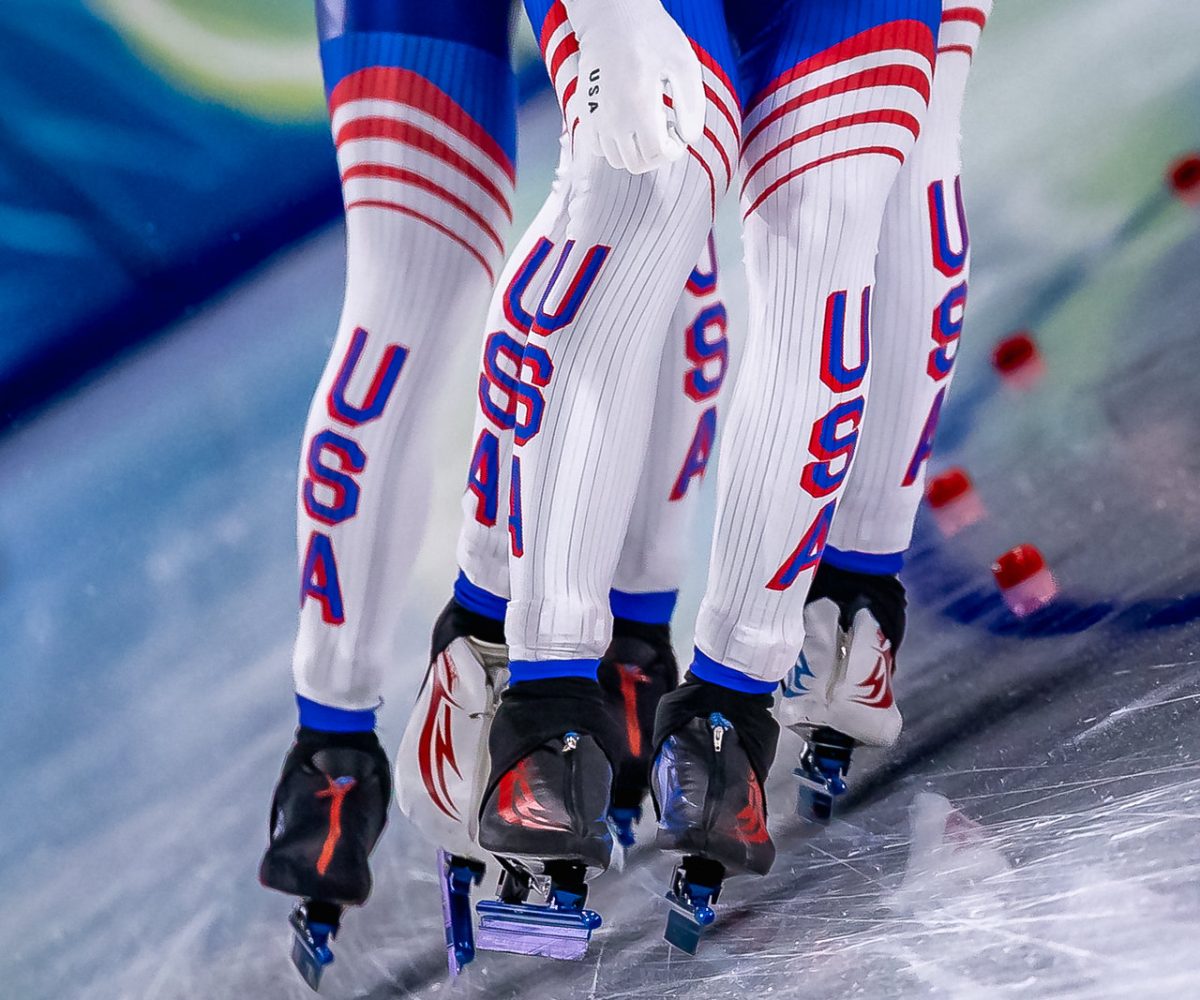
Given how the Marquette alumni’s gold medal race against Italy in the 2026 Winter Olympics unfolded, it could have joined that pile. Feeling fatigued going into the race, he and his teammates used their energy too quickly and, most painfully, lost.
Entering the race as gold medal favorites and world record holders, they exited Milano Speed Skating Stadium second-best.
Still, Lehman will always remember the rematch against Italy on Feb. 17. Because, he doesn’t view it as ‘what could have been.’ He sees it as ‘what was.’
“I think it’s the first and only time I’ve ever gotten to race for a gold medal,” Lehman said. “So it’s a pretty tough thing to forget.”
While the four-time Olympian stood on the second step of the podium with his two teammates in all white, he patted them on the back and as they received their silver medals, Lehman smiled.
“At the end of the day, it’s an Olympic silver medal,” Lehman said with conviction. “I always try and give a big smile because I know how many other people would kill to be on that podium in the position I’m in.
“How fortunate I felt on a bad day for us to be second in the world.”

Italy, which beat Lehman and Team USA to win gold, wasn’t a new opponent.
Lehman and his teammates won last year’s world championships, while the Italians finished in second. The year before that, Italy grabbed the title and the United States didn’t podium. To get to the Olympic finals, the Americans had to make it through two rounds: qualifiers and semifinals. In the former, which was run on Feb. 15, they were pit against the Italians. Team USA lost this race and were given the second seed.
Marcia Lehman, Emery’s mother, was most worried about this first race because if Team USA didn’t finish in the top four, they wouldn’t have been able to compete for a medal.
Two days later they raced twice in two hours. First, in the semifinals, the red, white and blue faced No. 3 China. By the fourth lap, the Chinese had lost a significant enough amount of time, they backed off to save their stamina for the bronze race, which they won.
While the Americans only skated half a race, Italy raced eight hard go-arounds against the Netherlands, winning by 1.8 seconds.
After the semifinals, again, Lehman and Team USA faced Italy. Now, in the gold matchup. On the stage. For world glory.
“It did end up being a pretty big, pretty heavy day,” Lehman said.
This finals was portended by the face off between USA and the Italians in the qualifiers. An eerily similar fate met the Americans in both. They started out very strong. But that was the issue. They started out very strong.
On the Milan ice, flatter times were winning races. Teams who could maintain a constant and competitive pace were posting better overall times. Italy was one of these teams and the Americans planned to replicate this strategy. Though, the day of the semifinals and finals, they went with their old strategy of skating harder earlier because they knew they weren’t skating their best flat times that day.
“We kind of reverted to the strategy that we’ve always done which is fly out, go out hard — fly and die…” Lehman said. “And we definitely died off a little bit.
“(It was) the only (way) that we were gonna probably have a chance of beating the Italians on that day.”
In the qualifiers, by lap five, Lehman and Team USA had a second over Italy and ended up losing by around a second. In the finals, by lap four, they were six tenths up and finished just over four and a half seconds behind.
The ice did the U.S. no favors. Once the American trio started to slow down, the ice didn’t carry them. Lehman said that the races on the Milan oval are “gonna slow down at a much higher exponential rate that you would at a rink like Salt Lake City.”
Emery’s father, David Lehman, watched the finals race without Marcia because she was standing in the lobby, one of the places she likes to be while her son is zipping around the rink. She doesn’t like watching the races because they make her too nervous. David, alternatively, stays calm. He isn’t one of the people in the crowd to jump and clap, instead remaining seated and analyzing the split times on the board.
So, he knew the result as soon as Italy passed Lehman and Team USA on lap four.
“These guys weren’t going to die,” David said disappointingly. “They’re home, they’re going for it. For something we just didn’t have.”
But still — Lehman smiled about the result. And so did his parents.
“We were just incredibly thrilled,” Marcia said.
Lehman especially smiled in his 1500-meter race two days later. After crossing the line 25th (he wasn’t expected to place high), he waved to the crowd as to say goodbye to the sport.
That night, Lehman and his parents went out for dinner to, of course, an Italian restaurant. The talk around the table was light and Lehman ordered a glass of white wine. Good food, family and a silver medal to show for his time in Italy? Nothing but a smile would be appropriate. Especially because of what his future holds.

He gets to find a place to hang up his silver medal (likely next to his bronze), but more than anything, he is able to give to the sport he loves. After he moves back to Chicago soon, he’ll take the head coach position at the Franklin Park speed skating club: where he trained as a kid. The place he used to gawk at Olympians, he will walk into with two medals.
Lehman hasn’t rewatched the finals race back yet and he doesn’t know if he ever will. For him, there’s no reason to. He remembers it so well.
“It was one that I was really trying to be present for,” Lehman said while packing his bags in his room at the Olympic Village in preparation to head back home.
“I don’t think it’s something that I’ll ever want to forget.”
This story was written by Benjamin Hanson. He can be reached at [email protected] or on Twitter/X @benhansonMU.