

Marquette University was accused of pushing low-income families into high-risk loans in a study released Feb. 12 by the left-leaning think tank New America. Zack Goodwin, assistant vice president of student financial aid, believes the results are misleading.
“It’s not true,” he said. “The main insinuation of that report is that somehow we are literally pushing lower-income — or just otherwise less-resourced — families into these loans, which we are absolutely not doing.”
Marquette is the only university in Wisconsin and one of five Jesuit universities on the list.
Rather than offering more money in scholarships to students with financial need, study author Stephen Burd said, the money is being offered to wealthier, high-achieving students to boost the university’s rankings. To fill this gap, the study said, Marquette is pushing lower-income families to take out Parent PLUS Loans — a federal loan option with no borrowing limits, minimal requirements and higher interest rates.
Currently, Goodwin said, 10-15% of Marquette students’ parents have taken out this type of loan.
“While the universities are wooing wealthy students, many of them are pushing the families of low- and lower-middle-income students into economic peril by pressuring them to take on heavy debt loads they are unlikely to be able to repay,” Burd said in the study.
C0nversely, Pell Grants are given to low-income families and don’t need to be repaid. The study found 34% of Pell Grant recipients at Marquette who graduated or left the university in 2020 or 2021 also had Parent PLUS Loans. The average total in loans after graduation for those families was around $30,000.
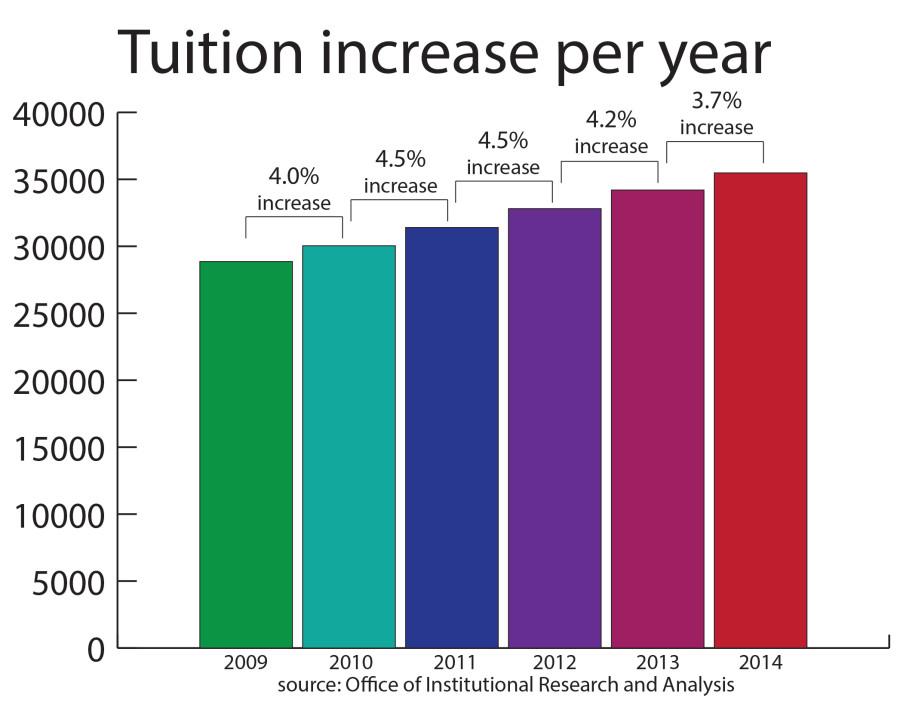
Marquette’s tuition for the 2025-26 year, including room and board, is around $70,000.
The university said 99% of students received financial aid last year and the university gave out $170 million in scholarships. In 2025, Marquette’s endowment was valued at $1.13 billion, $15 million of which is used on scholarships yearly depending on the endowment value, Goodwin said.
Goodwin said when Marquette parents receive financial advising, going into loan debt is always a last resort. If it’s the only option, he said, the university tells families what risks are involved.
“This can happen in a presentation setting or one-on-one to talk to them about what those options are — risks, what repayment really looks like — so they understand what this means and whether that’s really something they can handle.” Goodwin said.
If the family decides to take out a Parent PLUS Loan, the university offers financial counseling through the Bursar’s Office. Goodwin said his colleagues are available to helps students during their time at Marquette.
But, upon seeing the report, Goodwin said he was disappointed and felt like it misrepresented Marquette’s enrollment strategies. For the past few years, he said, the university has been able to give out more aid.
“It paints us in a light of us generally mistreating our less resourced families,” he said.
Goodwin was also worried the study would diminish the accomplishment of students receiving a merit scholarship, as there is overlap between needing aid and earning it.
“What that missed a little bit is also (merit aid) helps a lot of our lower income students attend,” he said.
Moving forward, Goodwin said, the university won’t be making any sweeping changes to their scholarship process.
“Conversations about how we can do more are very much a regular and ongoing part of our conversations in enrollment management at the university,” he said. “Every week, we are meeting about ways we can strategize better about helping students.”
This story was written by Sophia Tiedge. She can be reached at [email protected].