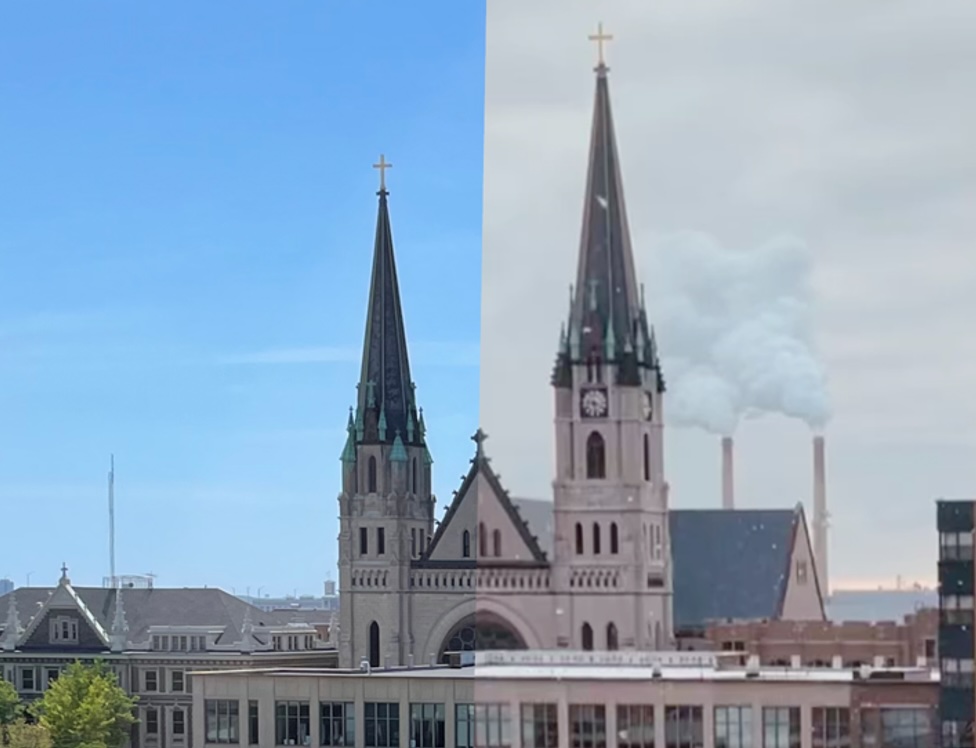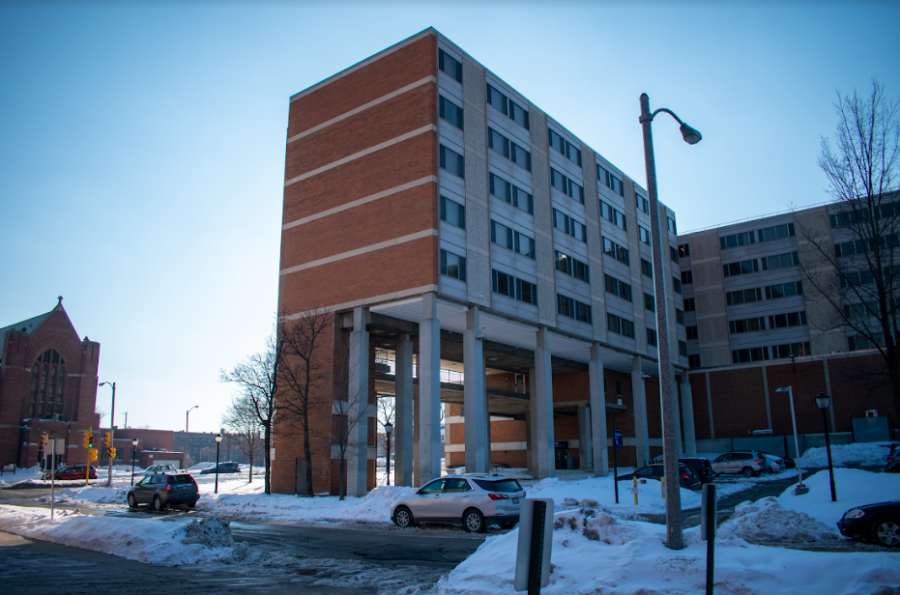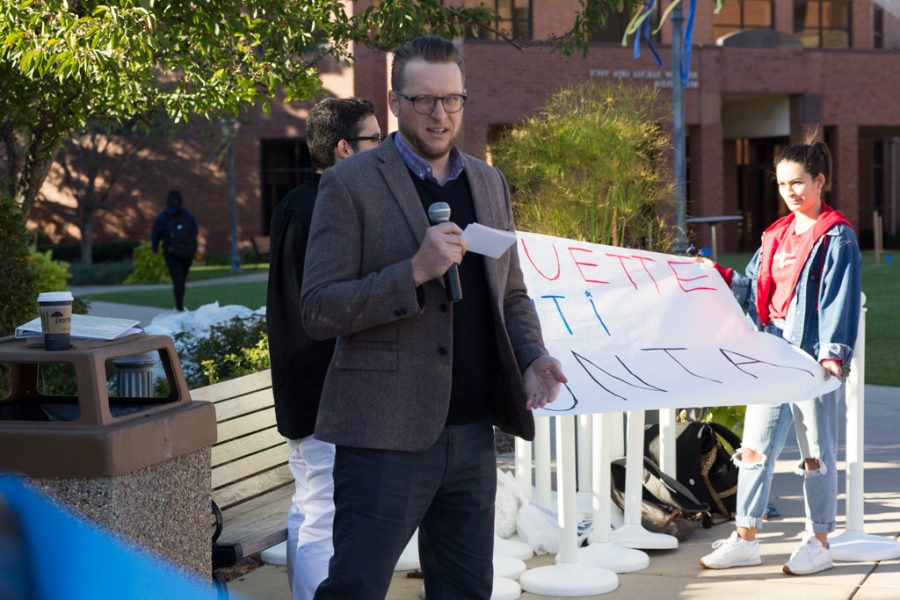


Students reading in hammocks, doing homework and eating lunch on picnic tables and friends playing football are all signs of a nice day on Marquette University’s campus. A record-high temperature of 63 degrees on Feb. 16 gave Milwaukeeans — including college students — a taste of a false spring.
Set in 1921, the previous temperature high for Feb. 16 was 56 degrees. The record for Milwaukee’s warmest February day was set on Feb. 27, 2024, at 74 degrees, breaking the 1882 record.
“Everyone says, ‘I want to live during exciting times,’” Stefan Schnitzer, director of environmental science/studies at Marquette, said. “Well, these are exciting times.”
As it turns out, the term “fool’s spring” actually has some merit. Schnitzer said it’s common for southernly winds to pull warmer air off of the Gulf of Mexico all the way to Wisconsin.
Later in the week, though, average February temperatures returned.
The swing in temperatures is something a number of Marquette students have become accustomed to.
“It’s a great part of [Marquette’s] culture,” Schnitzer said. “Everyone is suffering for three weeks, and then you get this and everyone’s out on the quad playing football and all the faculty are walking around in the sun.”
Max Sawyer, a senior in the College of Business Administration, took advantage of the warm weather by taking a walk.
“It really brings out Marquette’s campus,” Sawyer said. “The sun makes everyone happier.”
Calvin Whitney, a junior in the College of Arts & Sciences, also enjoyed a walk to the Historic Third Ward and the Summerfest Grounds. His warm-weather surprise was spotting a pack of foxes living on the grounds.
Even before Marquette opened its doors, Milwaukeeans have experienced record-high temperatures for over a century. Milwaukee has seen 25 record-high days since 1871.
“This is a natural phenomenon that always happens and that’s then accentuated by climate change,” he said.
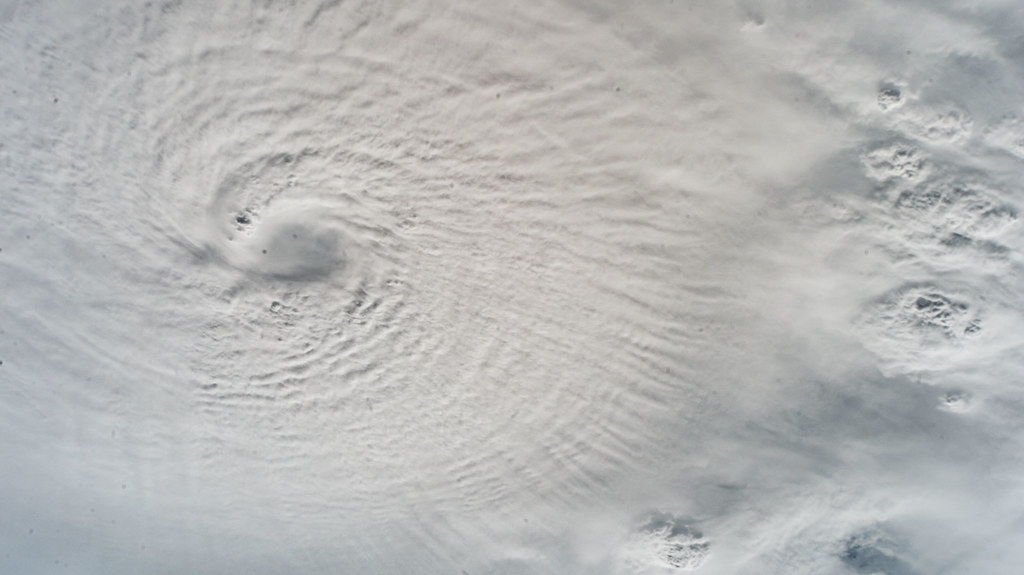
Climate change has been detected for decades, Schnitzer said, and has huge implications for the entire ecosystem.
Local plants develop systems over time to calculate the number of warm days and angle of the sun, which Schnitzer said is to guard themselves against putting up their leaves too early. Due to climate change, plants are experiencing “bud break” — the opening of their buds for new leaves and flowers — much earlier than normal.
This invites bees to pollinate sooner and requires hibernated animals to become active sooner. Schnitzer said the process of phenology, often called “nature’s calendar,” allows scientists to monitor how ecosystems respond to climate change.
“The whole ecosystem is changing in front of our eyes,” Schnitzer said. “All of these things have pretty big ramifications.”
Despite climate change being well underway, Schnitzer is still fascinated by how the ecosystem is creating a new cycle for itself that creeps up earlier each year.
“It’s all been predicted,” he said.
Though temperatures have dropped back to normal for February in Wisconsin, Marquette students and faculty can look forward to the first day of spring on March 20.
This story was written by Elena Metinidis. She can be reached at [email protected].