
Martin Luther King Jr. Day does not just honor its namesake; it serves as a reminder that the movement for equality and justice was more recent than society perceives.
The day commemorates King’s achievements towards human rights using nonviolent protest and civil disobedience. Turning King’s birthday into a federal holiday was a struggle as its bill did not obtain the two-thirds majority vote it needed to pass in the House of Representatives in 1979 — 11 years after King’s assassination.
President Ronald Reagan signed the federal holiday into law in 1983, and it has been nationally observed since.
King was one of the most prominent leaders of the Civil Rights Movement, along with Rosa Parks and John Lewis. His work set an imperative foundation for racial equality and justice, especially for African Americans. He organized the March on Washington protest and is most famously known for his “I Have a Dream” speech.
One would think the U.S. would have progressed more since King’s work, but the reality is that the Civil Rights Movement was only about 58 years ago.
King’s life and legacy fully deserve to be remembered and celebrated because the causes he fought for existed not too long ago, and they still apply to today’s world. We are still fighting for equal treatment and opportunity for people across all races and backgrounds. The human rights issues he fought for relate to current problems our country disputes over, including immigration, healthcare, abortion and more.
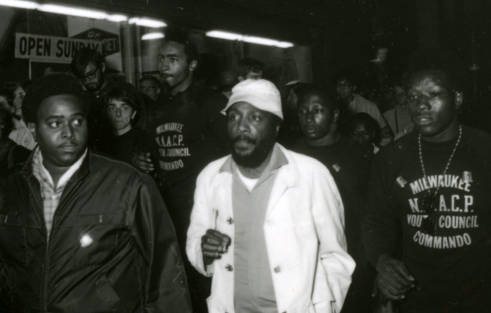
In 2020, a social media post gained significant attention, claiming that the photos from the civil rights era were taken in color but intentionally changed to black-and-white to make them look older. While the claim attained a decent amount of traction, context is necessary in understanding the truth behind the black-and-white photos.
Color photographs of the Civil Rights Movement are rare, but some have surfaced. The lack of color photography from the period is due to monetary restraints, as color film was more expensive than black-and-white film. Printing in color was also more costly.
Other factors also contributed to the monochrome images such as artistic preferences and technology limitations. This information falsifies the social media post that circulated.
While the claim was debunked, it demonstrates society’s wide misconception of when the Civil Rights Movement and King’s work truly happened. People’s perception of when the movement occurred is distorted because of black-and-white photos, questioning our understanding of our country’s history. For those a part of Generation Z, many of our grandparents were alive during the movement, further illustrating its recency.
The misinterpretation indicates how easily Americans distance themselves from the movement, treating it as ancient history rather than a not long past real-life experience.
It is important to recognize when this crucial event took place because it serves as a point of measurement. It emphasizes how long it took us to recognize the value of simple human rights and also highlights the unbelievable amount of resistance it faced.
Our country is in a place of division over issues that will continue to harm others if they continue to go unresolved. The battle that King perpetuated is still ongoing. People deserve rights, justice and dignity.
Martin Luther King Jr. Day is not just another date on the calendar. It is a person, a celebration and a reminder that the fight for justice did not start all that long ago.
This story was written by Rachel Lopera. She can be reached at [email protected]