

As the end of the semester nears, Marquette University students are preparing for late nights of schoolwork and studying. Some of those midnight hours may cut into full nights of sleep, leaving students falling behind on rest.
But rather than falling asleep face-first in a textbook or curled up on a library chair, students have four new spots to rest on campus — and they look far different from where someone might typically lay their head.
“It’s like a dentist chair, but with an egg over it,” Tessa Kohler, assistant director of Student Wellness and Health Promotion, said.
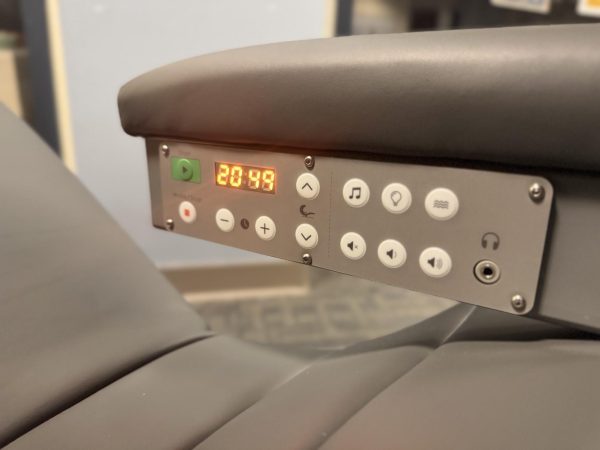
Those chairs are the new MetroNaps EnergyPods on campus, which are available to students for a quick recharge throughout the day. Students can lay in the cocoons for a suggested 20-30 minutes of shut-eye, controlling their nap with a panel along the right armrest. The remote lets users recline the pod, relax, adjust music and lighting and set a timer for their sleep.
Though they are open for all students to use, the pods were particularly installed as an option for commuter students without a place to sleep on campus, Luis de Zengotita, chief wellness officer, said in an email.
Two pods are nestled in the lower level of the Alumni Memorial Union. The remaining pair is in the LOVELLSTRONG Center for Student Well-Being on the Wellness + Helfaer Recreation facility’s third floor.
“They align with the vision that Dr. Lovell and Amy [Lovell] had for offering programs, resources and tools that contribute to holistic well-being,” de Zengotita said in an email.
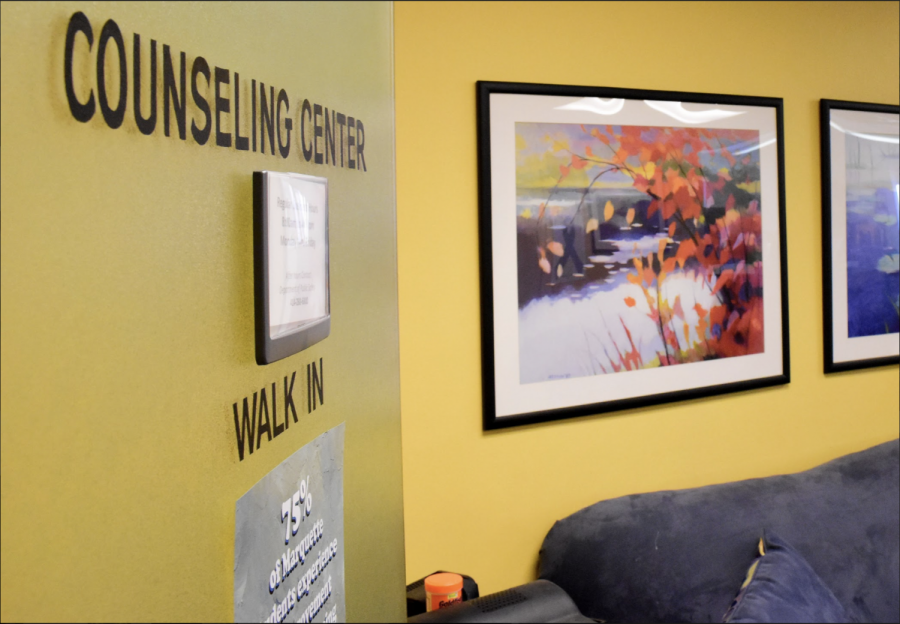
De Zengotita said Marquette’s wellness program worked with Amy Lovell to improve the LOVELLSTRONG Center after its opening in January. With 40-60% of college students reporting sleep issues, the MetroNaps pods emerged as a candidate for putting donor funds to use.
According to the Mayo Clinic, a 20–30-minute daytime nap can benefit mood and alertness in addition to boosting performance.
“If you did have a late-night studying and you need to catch up on some sleep and rest, you can take a quick power nap and then feel free and energized so that you are a healthier, happier learner,” Kohler said.
MetroNaps EnergyPods, listed at $13,000 on the company’s website, exist at several college campuses in addition to Marquette’s, from the University of Miami to Washington State University. Professional workplaces such as Google, Samsung and FedEx are also MetroNaps customers.
“Our brains are good at solving problems when we sleep, and people are in a much better position to make important decisions when they’re well-rested,” Christopher Lindholst, MetroNaps co-founder and CEO, said in 2019.
With students working to improve their physical and cognitive health, Kohler said, sleep is especially important on college campuses.
“I think there’s a really good conversation to be had around holistic wellness and just giving yourself a break,” Kohler said. “And if that does include a nap or vegging out for 20 minutes, I think that can bring you back to re-energize yourself so that you can power through the rest of your day.”
While opportunities to rest can benefit students during the approaching finals week, Student Wellness and Health Promotion hopes students will use them for semesters to come.
“As college students, you’re dealing with a lot,” Kohler said. “Giving yourself space and time to rest is valuable and will ultimately benefit you in the future.”
Suggestions for students to get better sleep
Student Wellness and Health Promotion advises students to take care of themselves by prioritizing sleep on their “to-do lists.” Strategies include:
- Setting a “body clock” and waking up with light, either by letting sunlight into the room or walking around with the lights on
- Getting up at the same time every day to stay on a consistent sleep cycle
- Taking 20–30-minute naps during the day to supplement sleep at night
- Avoiding stimulating activity, such as studying, for 30-60 minutes before bedtime
- Doing light stretching or practicing other relaxation techniques before going to sleep
- Cutting down on alcohol consumption to avoid “shallow” sleep and other disruptions to sleep cycles
- Testing out white noise at night, such as a fan running in the background
This story was written by Lance Schulteis. He can be reached at [email protected].