

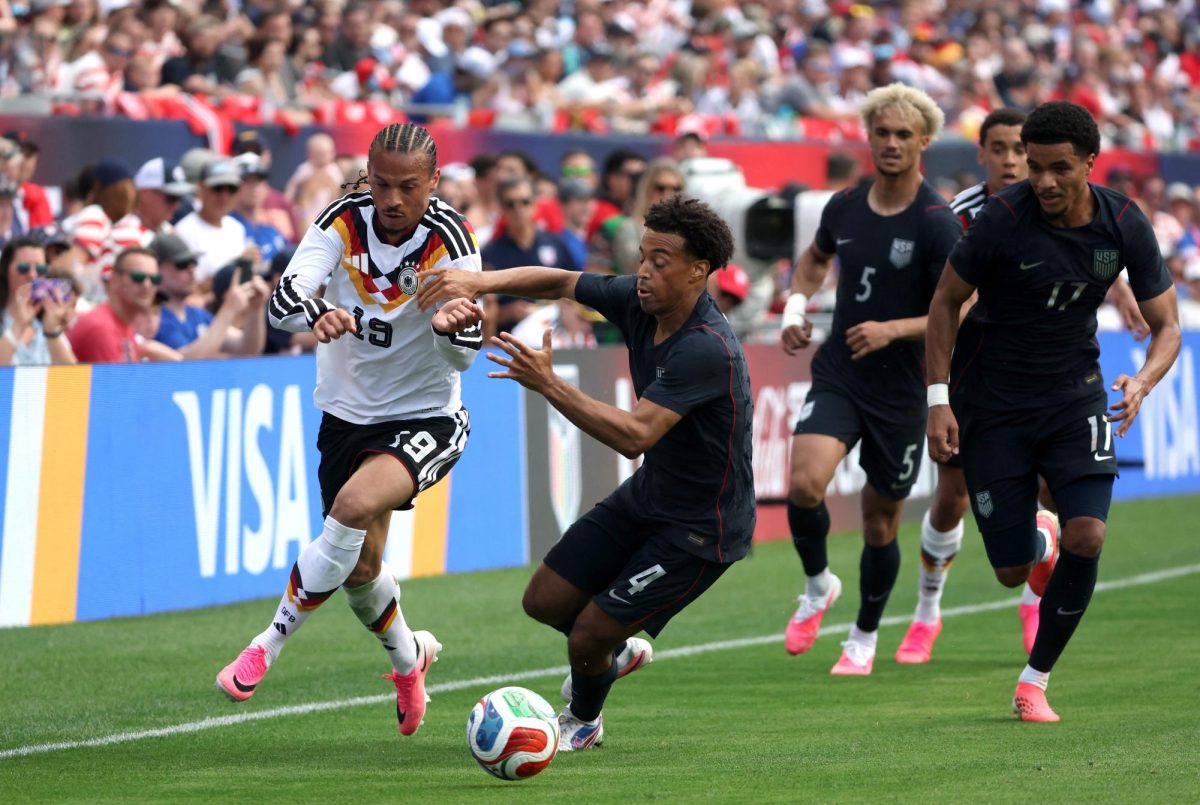
Welcome to the world of soccer: where games can end in a tie and the clock never stops running. It’s a nuanced and tedious study to understand all of the rules, and not to mention all of the slang.
Let’s start with this: “a cheeky nutmeg started the counter, into a clean through ball to find the striker for a banger in the top corner. Class from start to finish, the gaffer will be buzzing.”
Don’t understand it? Don’t worry, you will.
This Equals That
- Pitch = Field
- Kit = Jersey
- Boots = Cleats
- Nil = Zero
- Gaffer = Head coach
- Equalizer = Goal that ties the score or equals it
- Draw = Tie
- Clean sheet = Zero goals given up for a team
Coin these phrases
They’ve just bottled the game by allowing that goal -> that just lost them the game, a major fumble.
That goal was a screamer— it came from almost midfield -> a jaw-dropping, celebratory worthy goal.
Stopping his dribble than re-starting was cheeky of him -> a coy, sly play made to show off a players skill.
He’s such a flopper, it’s starting to get embarrassing -> a player that exaggerates fouls and injuries by flopping on the pitch.
Letting that get through the defense what a howler -> a poor defensive play.
That was a proper move from a class player -> an intelligent, technical move by a respected, calm cool and collected player.
Getting technical
Red and yellow cards are given out to players, coaches and even fans as a disciplinary means. When someone is “booked” that means they have been given a card. Yellow cards are considered a “caution” or a “warning” for play that is not appropriate but not egregious. Red cards are an immediate rejection from the match, often for overly flagrant moves on the pitch. Two yellow card bookings equal a red card. Teams will be very strict about their players receiving cards as it can affect their availability for future matches.
Offsides is the soccer phrase that confuses most people, and rightfully so. In simple terms, a player will be called offsides when they are ahead of the ball or the first defender on the goal-line.
VAR is the video assistant referee that aids in calls, most often offsides, that the on field referee’s can utilize in assisting with calls or taking a better look. You will see the official create a box with his hands indicating the need to check VAR.
Stoppage time, also known as injury time, is the reason that the clock does not stop in regulation, to keep the flow and pace of the game moving. Stoppage time is added at the end of each half to allot for times the clock would have been paused throughout the match.
Just for Kicks
Free kicks
These are awarded when the defense commits a foul or another act that forces stop of play. Free kicks can be either direct or indirect. Direct gives players the ability to score off one kick, where indirect requires the player to pass the ball or be touched by another player before attempting to score.
Corner and goal kicks
The difference between these two kicks is who they get awarded to, but they both occur when the ball crosses the goal line. It is a corner if the defense was the last to touch the ball, where it’s a goal kick when it’s the offense.
Penalty kick
When a denial of goal scoring opportunity takes place within the defense’s box, or also a handball.
Other plays
- Nutmeg: a player sends the ball through an opponent’s legs and connects with it on the other side.
- Through ball: a pass sent by the offense in front of the defense.
- Cross: a pass sent from across the left or right side of the field into the goal area.
- Touch: how a player controls the ball when they first receive it.
- Tackle: unlike American football, tackles in soccer focus on clearing or stealing the ball out from under a player without making contact with the player.
- Counter: when the team wins possession of the ball, a quick turnover into the offensive play.
The action has been rolling since Thursday, including a massive victory for USA in a 4-1 win over Paraguay, and it’s not stopping anytime soon. England, Croatia, Fance, Norway and Spain have still yet to take the stage for their first matches, so make sure to tune in this week.
This article was written by Sofie Hanrahan. She can be reached @[email protected] or on X @SofieHanrahanMU.
