
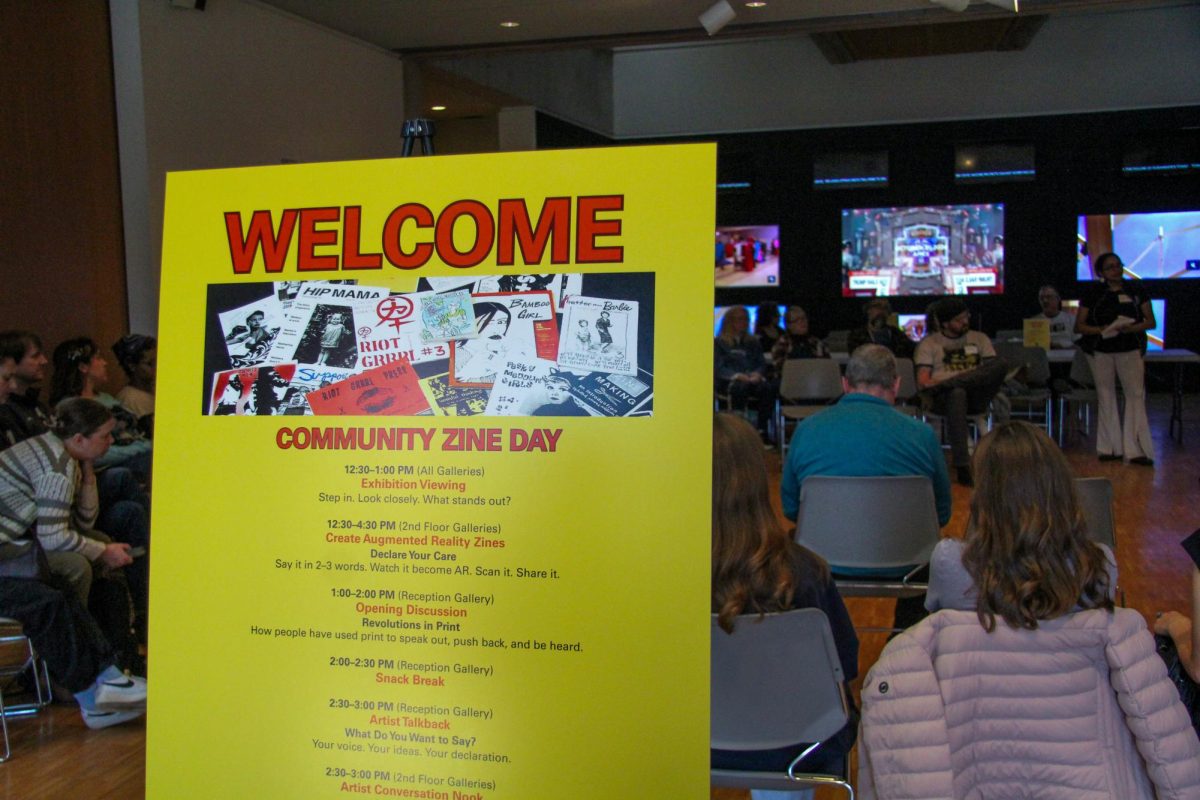
The Haggerty Museum of Art hosted an afternoon of creativity and discourse with “Community Zine Day: Declarations in print” on March 21. Attendants learned not only how to make their own zine but also how the medium has shaped the cultural and political landscape.
A zine is a self-published physical or online booklet that uses art and the written word to convey a message. They are often produced in small quantities and focus on personal expression and activism. While zines are usually characterized by a smaller page count, they can be as long or as short as the author desires. Zines can be about a multitude of things, but their core purpose is artistic and free expression.
The medium originated from 1930s science fiction fanzines, which were created to build a sense of community among sci-fi fans. Zines then diverged into social commentary in the 1990s, when zines were used to speak out against sexism. Today, there are all kinds of zines, but they are most known to be a popular medium for political activism.
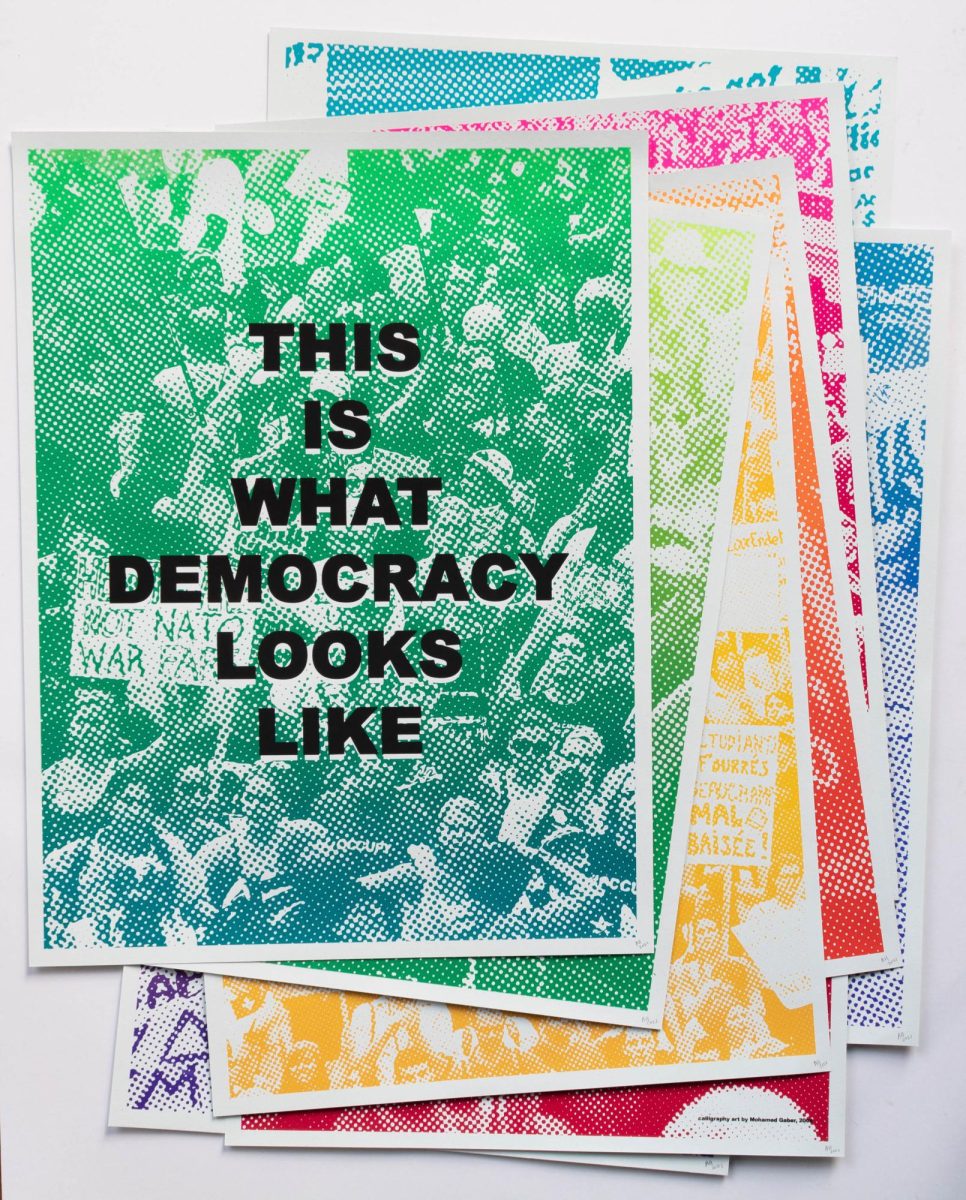
For each new exhibition, the Haggerty hosts a community event that correlates with what the museum is showing at that time. For the 2026 spring semester, the Haggerty is hosting an exhibition of art that commemorates the 250th anniversary of the signing of the Declaration of Independence, which includes the exhibits “Declaration of ___,” “Defying Empire” and “Let the Real World In.”
Dean McBride, the Haggerty’s Event Associate, said that zine making seemed like a fitting activity to do in correlation with these exhibits, as pamphlet making was a major component in spreading the idea of independence during the Revolutionary period.
“[The exhibits] just naturally drew to zine making and sort of art as social activism,” McBride said.
The afternoon opened with a panel featuring the curator of “Defying Empire,” J. Patrick Mullins, Milo Miller — the co-founder of the Queer Zine Archive Project – and Melissa Mursch-Rodriguez — the founder of Moody, a zine consisting of the work of queer and BIPOC creatives. Topics of conversation included the origins of zines in the science fiction world, how zines contribute to personal expression and zines’ role in activism.
Because of the diverse applications that zines can be used for, Mullins encouraged people to pay attention to how they can build communities and make change.
“The world should really pay attention to what’s happening in the zine world,” Mullins said. “Because the zine underground today can sometimes be the top character tomorrow.”
Attendants for the event included people who made or knew about zines and people that have never interacted with zines before. Nevertheless, attendants engaged intently with the panel and were intrigued by the idea of learning about and creating their own zine.
“I feel like there’s a really diverse crowd here, which is great,” Abby Bunch, a sophomore in the College of Engineering, said. “I feel like that’s a big thing about zines is bringing people together and crossing boundaries.”
After the panel, attendants were given three opportunities to contribute to and create their own zines in an activity called “Declare your Page.” Attendants could screen print their own “declaration page” and decorate it with whatever message they were passionate about. The sheet had “Declaration of___” printed at the top, and attendees used markers, pastels and paint to illustrate a message. The sheets would then be compiled into a community zine and displayed in the Haggerty.
In one of the featured Haggerty exhibits, “Let the Real World In,” young adults Hannah Plevin, Iman Fatmi, Alanis Salgado and Kam Pickett use zines to speak out about the conflicts in Palestine and other social issues.
However, Plevin said, zines don’t need to be political. They’re simply a way to be expressive.
“It’s just a creative way to get your feelings out there, no matter what they are,” Plevin said. “Zines can be about anything.”
Additionally, attendants had the opportunity to create augmented reality zines in “Declare your CARE,” where attendants would create a two to three-word message explaining what they cared for, which would then be transformed into AR experiences that were accessible via QR codes.
The final event, “Rage. Grieve. Heal. Protest.” allowed guests to add their own messages and artwork to four large-scale banners that represented each emotion, which would later be displayed in the Haggerty. Attendants were able to paint and draw any messages that they felt resonated with these emotions. The “Rage” banner has words like “WHY?” and “WTF” with drawings of fire, while the “Protest” poster has messages like “Antifascism is self-defense” and “Protect the Dolls.”
Bunch said that zines, as a form of media, are making these conversations accessible, comfortable and efficient so that the public can become more knowledgeable about certain issues.
“Even though society really tries to push these more scientific, super formal ways of presenting politics and stuff, we should really be open to these more casual conversations that zines are trying to have with people,” Bunch said.
This article was written by Elise Emery. She can be reached at [email protected].