

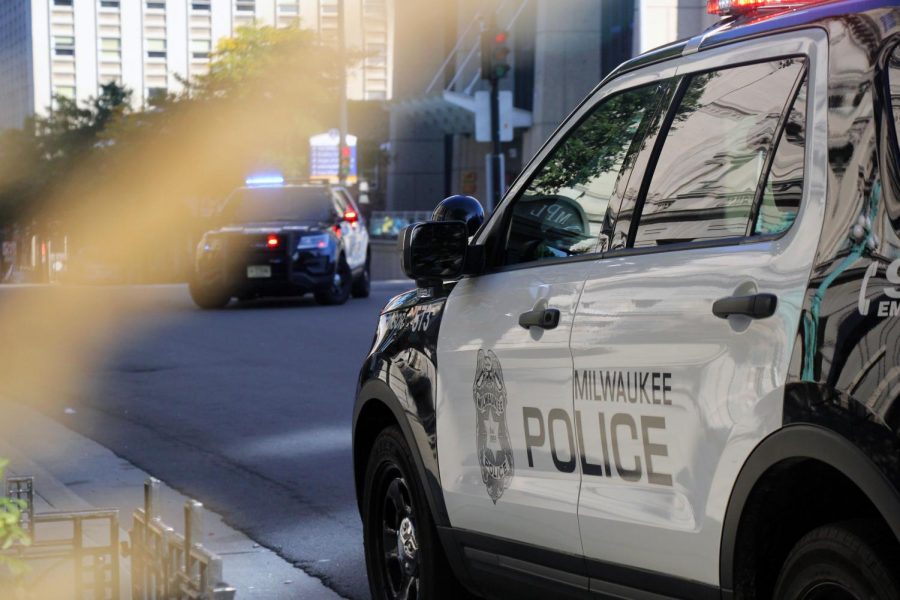
The Milwaukee Police Department will no longer consider acquiring facial recognition technology Chief Jeffrey Norman announced on Feb. 6. Despite proponents who believe its efficiency will benefit MPD’s policing and investigative processes, this choice will ensure fair leads and convictions of criminals, ultimately maintaining public trust.
MPD planned to partner with Biometrica, a FRT database that would identify an individual they are pursuing based on a single frame of video surveillance to match them to millions of identities in its database. In exchange for over 2.5 million mugshots, Biometrica offered MPD years of access to its software.
Anti-FRT activists spoke out at a Fire and Police Commission meeting on Feb. 5, one attendee telling WISN-12, “This is a direct attack on our civil liberties, and it impacts our right to speak out.”
Regulations can be implemented to prevent FRT from being misused, but MPD cannot control the system’s identification deficiencies and algorithmic errors.
The Facial Recognition and Biometric Technology Moratorium Act was proposed in 2021 to regulate FRT in federal law enforcement, but states and municipalities must take individual action to create guardrails for its use. For example, Maryland’s law, being enacted in Oct. 2026, will put limits on what instances FRT can be used for in investigations. Montana and Utah also enacted laws that require a warrant for biometric data to be obtained from perpetrators, victims or witnesses.
AI is a significant component of FRT, which analyzes millions of identities by using individuals’ biometric templates — detailed outlines of facial features — in the database’s video surveillance records. The system commonly matches the selected individual to all other images in the database, which can be millions at a time.
The DOJ reported that some developers of FRT technology have addressed the issue of bias by improving their systems, finding lower false matches across gender, age and race demographics from these improvements. Despite these improvements, an individual’s trajectory in the justice system should not be determined by AI — it should remain a human responsibility of law enforcement.
This algorithm may make investigations more efficient and less costly, but compared to traditional methods, its frequent errors and breach of privacy pose a danger to citizens.
Biases in FRT have been prevalent across many police department’s uses of the technology. When the technology fails to accurately identify marginalized groups, it can contribute to law enforcement’s conviction of the wrong person, when used for arrests and convictions. This means that errors directly violate the fundamental right against unlawful search and seizures.
The U.S. Department of Justice reported that there have been at least seven mistake arrests as of 2024 due to FRT, most of which were Black men. Scientific American suggests that these false matches are due to FRT’s lack of diverse data sets in its training algorithms, paired with police officers’ own biases.
In terms of privacy, the American Civil Liberties Union of Minnesota argues FRT can track people’s personal movements in images and video without consent, violating individuals’ fundamental right to privacy. This expands the threat FRT poses to every individual regardless of demographics.
Milwaukee County ranks 15th in the nation for exoneration rates, with 2.59 per 100,000 citizens being exonerated, or wrongfully convicted, each year. The city should not let AI or unreliable technology increase this rate. Instead, MPD should rely on traditional practices that ensure fair convictions.
Creating adequate regulations for FRT’s use will allow law enforcement officers to utilize its capabilities while preventing unlawful arrests and convictions.
While technology will continue to advance in law enforcement, Milwaukee made a wise decision in keeping FRT out of its investigative practices.
This article was written by Bella Gruber. She can be reached at [email protected].