

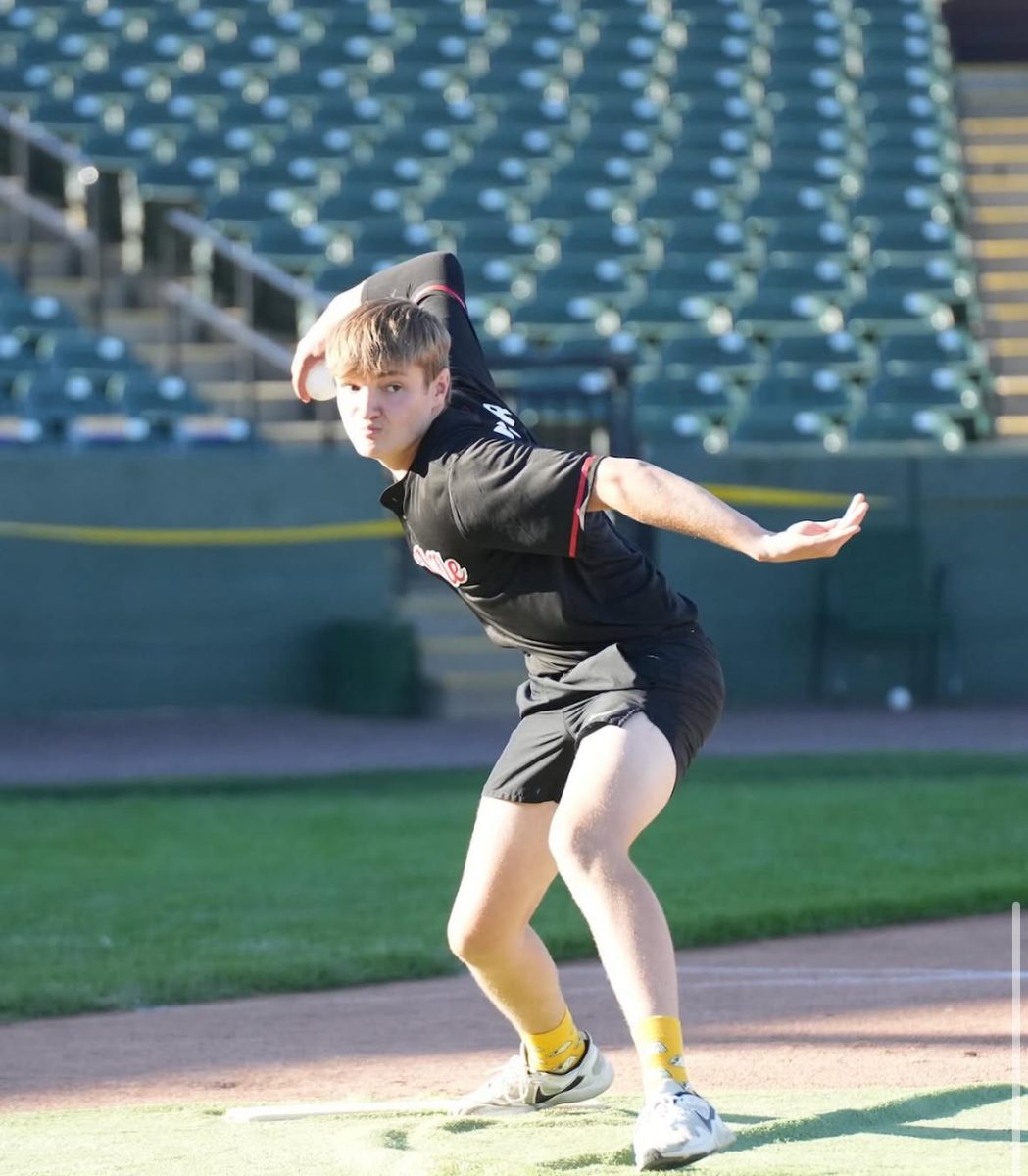
Before the school year started, Giacomo Colella was on a mission to create community on campus. The junior in the College of Arts & Sciences wanted to develop something that would bring people together consistently.
Stepping into the Wellness + Helfaer Recreation Center with a mission on his mind, he noticed the basketball court layout in the building. Colella walked up and down the stairs, scoping them out. The idea struck him that they could be used for a unique purpose.
Wiffle ball.
“That moment sparked the idea that this could be both fun and legitimate,” Colella said.
From there, he became focused on developing the structure of the league and its intention, adding a draft, teams, rules and an overall identity. As word of the club grew in popularity across campus, Colella saw more and more people wanting to sign up and join.
Including a professional wiffle ball player.
First-year student Liam Porter’s love for baseball started at 3 years old and carried on throughout the end of middle school. Porter decided not to continue the baseball journey however, as other interests took over.
Across the lake in Northville, Mich., Porter and his little brother Evan fell in love with playing wiffle ball in their backyard. This love blossomed into the two siblings starting their own league for locals.
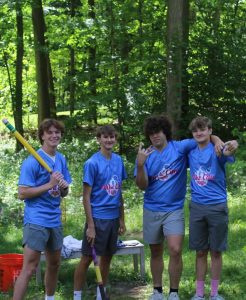
Porter ran the league for three years, scheduling and streaming games on YouTube.
“Running the league for three years was a lot of fun,” Porter said. “It was tough scheduling all the games and getting players out to the field to play, but it was so rewarding and it was so much fun.”
Porter has taken a break from playing in the league since being at Marquette, but he finds himself practicing pitching at the Straz Gym in hopes to be drafted to Major League Wiffle Ball (MLW). Created in 2010 by Kyle Schultz, MLW went from five little kids playing in the backyard to now 500,000 plus YouTube subscribers and hundreds of thousands of TikTok followers, the league has grown substantially.
It consists of eight teams with five to eight players, playing games out of Brighton, Mich.
MLW hosted a tournament at Globe Life Field, home of the Texas Rangers, where Porter’s little brother Evan played in the tournament with a team called the “Pacific Predators.”
Evan was drafted 7th overall and Liam says it’s funny to see him go out and play.

“Everybody’s like ‘Oh, why are the Predators taking some little shrimp at seven overall?’ And then Evan goes out there and dominates,” Porter said. “Everyone loves him. He’s super good and he’s actually my training partner.”
Porter explained that getting drafted to the MLW is an informal process where players can message managers when they want to see if they’re interested in signing them.
“There’s no recruiting process,” Porter said. “It’s like if someone sees you playing well and says, ‘I want to pick you up,’ then you can sign with the team.”
Porter is friends with a manager of the “Metro Magic” and hopes that he signs him at some point to play. Even though they play with a different ball, he sees the similarities between Marquette indoor baseball and wiffle ball. The indoor baseball league uses a pickle ball instead of a wiffle ball and play games on a basketball court.
“I actually find it’s harder to hit in the indoor baseball league than it is in a wiffle ball league,” Porter said.
The indoor baseball league started as something fun to do at Marquette, but it’s exceeded Porter’s expectations.
“I actually found as of late that I’ve enjoyed playing in the Marquette league more than I have playing wiffle ball,” Porter said.
Porter has also noticed the indoor baseball league at Marquette has built a significant community. There are four teams consisting of 10 or more players, and games are held every Friday afternoon in the rec center.
“It’s changing the vibes at Marquette,” Porter said. “It’s a good time on Friday afternoons to just go out and play with your friends. I’ve met a couple of good friends.”
Colella believes that having Porter join the league has been incredible and validating.
“Liam Porter was instrumental in helping get the league off the ground,” Colella said. “His presence raised both the level of competition and the ambition of the league.”
The “Liam Porter Award” was named after Porter and is given to the best pitcher of the season. In which case, Porter won the award, of course.
Colella hopes the club becomes something that lasts beyond his time at Marquette.
“I’d love to see games broadcast through video and radio, and for the league to collaborate with media and analytics students,” Colella said.
On Friday afternoons, when games are in full swing, Colella often looks up and sees people on a workout break hanging over the railing, cheering on the teams below.
“I think overall the league has added something distinctive and engaging to campus life,” Colella said.
This story was written by Ben Ward. He can be reached at [email protected] or on Twitter/X @BenWardMU.
