The romanticization of the past is problematic when it excludes the acknowledgement of important events, hindering society from moving forward.
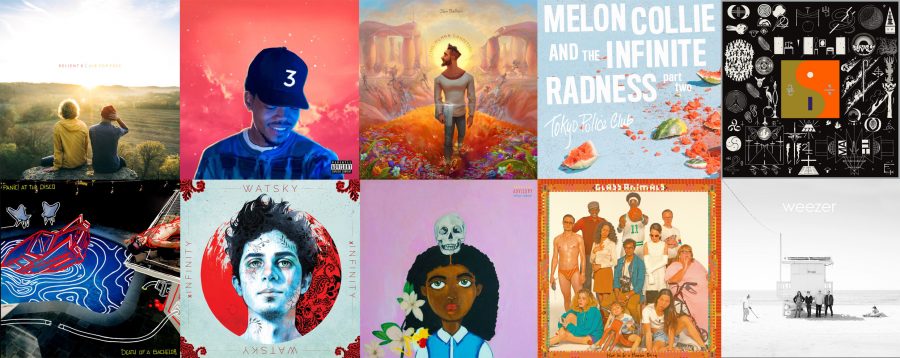
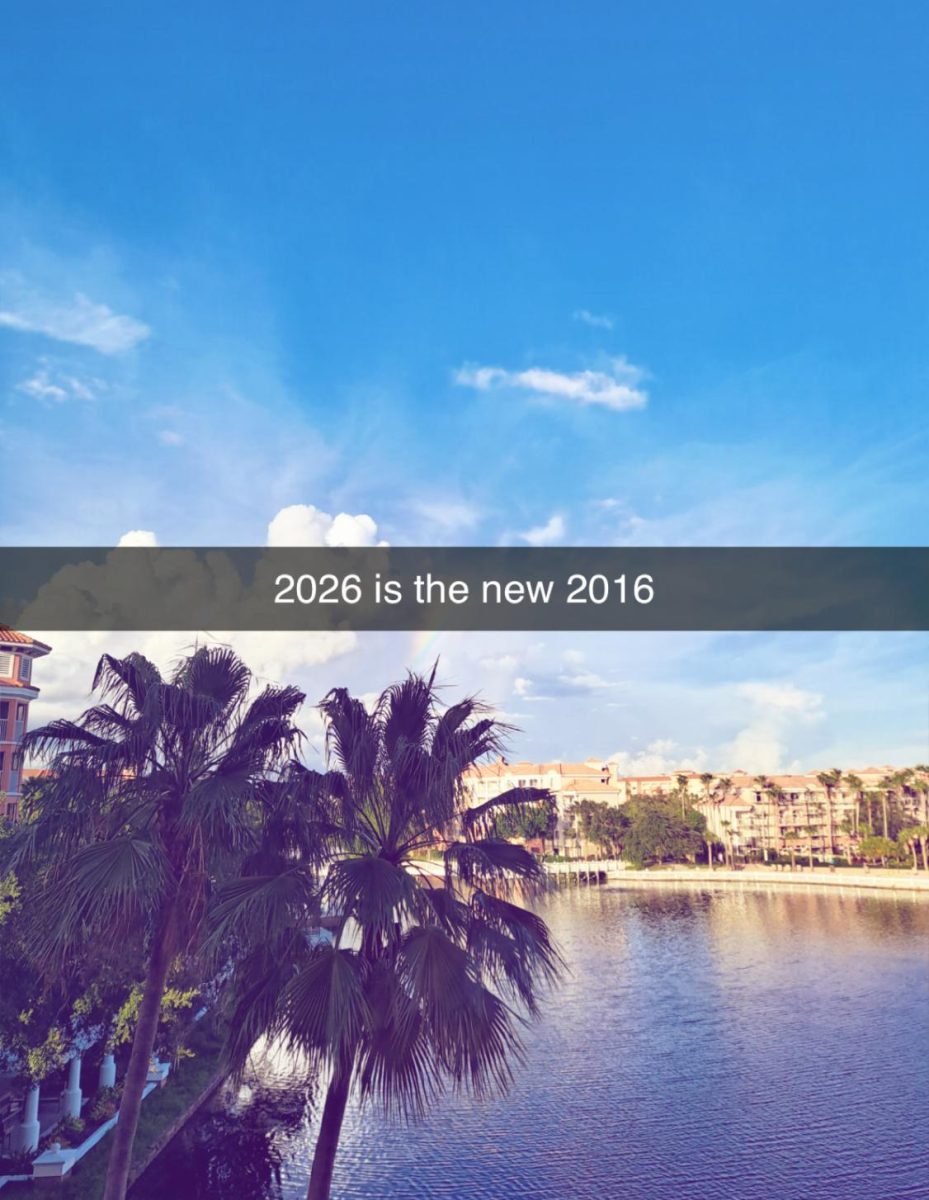
A recent phrase taking over social media platforms is “2026 is the new 2016.” From celebrities and influencers to everyday users, everyone is posting content that was popular ten years ago, reminiscing on the lifestyle from that period.
The aesthetic of 2016 is hard to miss, with the abundance of cool-toned filters, chokers and grainy pictures.
On TikTok, a common act for this trend is posting a picture or collection of pictures with a 2016 filter, accompanied by a song from the era. Commonly used songs are from artists like Zara Larsson, whose music was very popular ten years ago. Similarly, Instagram users participate by assembling a slide deck of decade-old photos with a witty caption and fitting song.
While this is a fun way to remember the past, it does not account for the important events of 2016 that have ramifications present today. The year is being remembered as completely carefree and light-hearted when that was not the case — there was more to it than just filters and music.
For example, a polarized political climate surged in 2016, alongside a highly contentious presidential election.
According to a Pew Research Center study, 58% of politically engaged Republicans reported feeling angry and frustrated with the Democratic Party in 2016, and these feelings were reciprocated from highly engaged Democrats as well.
Further, the study showed how the rise of political polarization stemmed from dislike of the opposing party’s candidate in the 2016 presidential election. On a scale from 0-100 on a coldest-to-warmest “feeling thermometer,” Democrats rated Donald Trump an 11 on average, with 68% rating him at zero.
These feelings were prevalent in 2016, but social media is currently leaving them out of its ten-year reminiscence. And that polarization is just as prevalent today.
According to another Pew Research Center study conducted in 2025, 85% of Americans feel that political violence is increasing, and one participant said division between parties is higher than ever.
Another forgotten event that shaped 2016 was the Pulse nightclub massacre. With 102 total victims and 49 deaths, the tragedy was the deadliest mass shooting at the time and is now second to the Las Vegas Strip massacre in 2017.
While this tragedy is difficult to remember and reflect on, it is vital that we do so society does not repeat the mistakes of the past.
Choosing to only remember positive things can be a sign of suppression, a common defense mechanism used when people consciously choose not to recall hurtful memories. The “2026 is the new 2016” trend displays this as people focus solely on the carefree nature of 2016 and ignore the serious events that have been influential in history.
This positive recollection of the past could be a desire for escapism. When people participate in this trend, they forget about the world’s issues, but that will not create a better future.
If we cannot acknowledge areas for improvement in society, then we will not grow. So, as we reminisce about the fun memories of the past, it is crucial to also remember the events that continue to change our world today.
This story was written by Amelia Lerret. She can be reached at [email protected].