
New Year’s resolutions should not be treated as the big ordeal they are made out to be. The idea of making year-long goals can cause immense pressure, unattainable expectations and place unnecessary rush in January.
As the start of the new year continues, many people create resolutions attempting to enhance their health, well-being and lives. While these goals can be beneficial, problems arise when they are impractical or not created with genuine intention.
The phrase “new year, new me” implies that a new calendar year automatically creates a refined version of oneself, which is false. This lie allows people to believe that extravagant changes in their lives are attainable in a short period of time. This is unrealistic because true change takes time, effort and discipline.
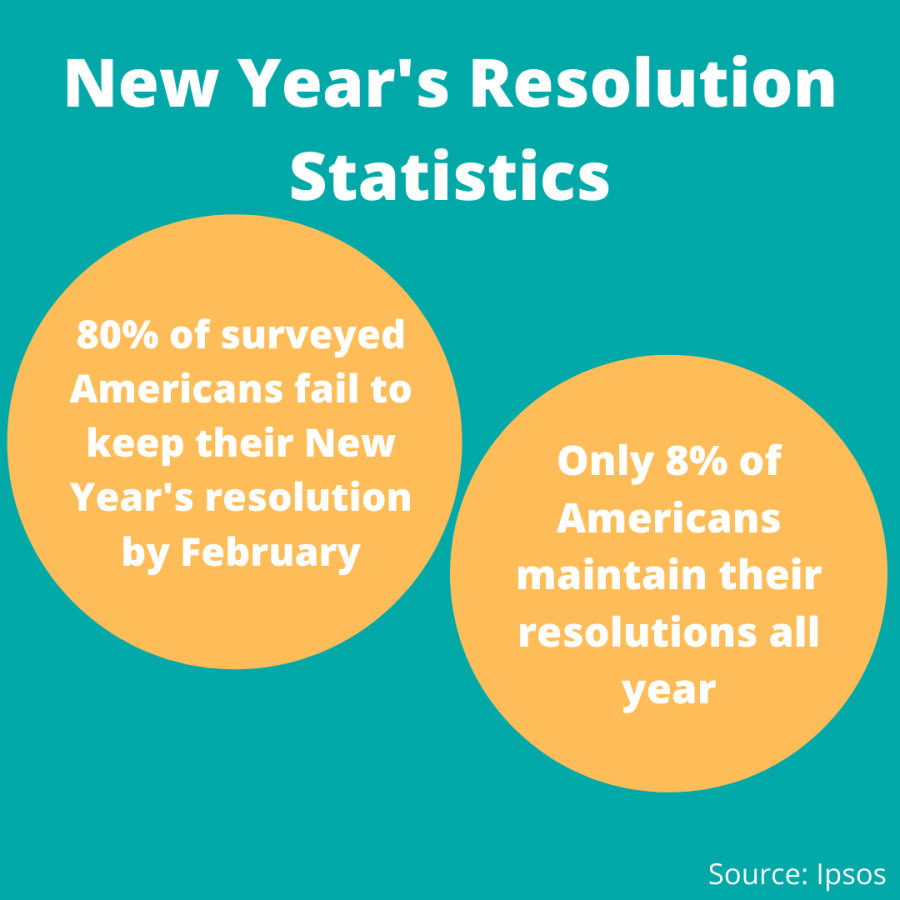
This overestimation of abilities leads people to abandon their goals early in the year. In fact, the second Friday of January is known as “Quitter’s Day” as many resolutions are abandoned.
Even if the goals are not strenuous, they can be harder to fulfill when people create many of them, and the abundance makes their achievability difficult.
While the intent behind some resolutions may be authentic, many are created from pressure to keep up with society and social media. Resolutions are not something that should be forced onto people, given that many are drastic changes in a person’s life.
Social media feeds flood with posts with examples of extreme goals, providing ideas for viewers. This content can be inspiring, but it can also be harmful by encouraging people to fulfill unrealistic objectives.
For example, a resolution to complete one hour of intense cardio every day may be problematic for someone who is not used to exercising at all. Not only is this straining on the body, but that goal is likely to be dropped early in January.
A more reasonable solution would be to break it up into smaller steps that are easier to accomplish one by one, like exercising for 30 minutes three to four times a week. Building up stamina is a great goal that looks different for everyone, highlighting the importance that resolutions are made for the individual.
It is common for people to give up after missing one day of exercise instead of persisting. Real improvements take time and consistency, so it is imperative to strive for progress over perfection.
Additionally, pressure from society and social media can lead people to believe they must only have certain resolutions, but that is not the case. It can be healthy for some people to focus on areas concerning well-being, like rest and relationships.
According to the American Institute of Stress, 69% of adults reported needing more emotional support in 2025. Many of them outlined how loneliness was a large contributor to those feelings.
While it is not a common resolution, like losing weight or growing academically or professionally, it is still beneficial. For many, slowing down and reducing stress by building stronger connections is a reasonable and advantageous goal. This may be completed by seeing friends more often or even sending texts to catch up.
There are also no time restrictions on when improvements can be made in a person’s life. People can set goals whenever it works best in their lives, allowing them to make healthy decisions without external influence.
New Year’s resolutions do not have to be strenuous or even made at all, and with so many dropped by “Quitter’s Day,” it will help prevent disappointment and guilt. Instead, creating smaller goals to make aspirations more achievable encourages consistency and perseverance throughout the year.
This story was written by Amelia Lerret. She can be reached at [email protected].